
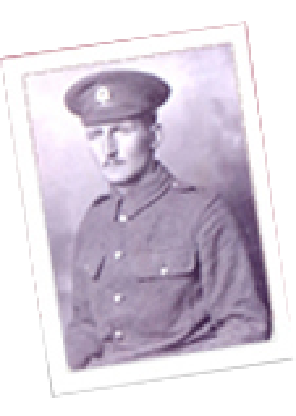
- First Name(s):HenryGeorgeWestmorland
- Surname:WOOD
- Service Number:Unknown
- Rank:
Captain
- Conflict:WW1
- Service:Army
- Army Sector:Infantry
- Regiment:Worcestershire Regiment
- Battalion:1st/7th Battalion
- Former Units:None
- Date of Death:3rd August 1918
- Age At Death:29
- Place of Death:Unknown
- Place of Burial:Boscon British Cemetery, Italy, Plot 2. Row A. Grave 6.
- Place of Birth:Unknown
- Home Town:Unknown
- Casualty's Relatives:
Son of Thomas Percival and Mary Wood, of South Norwood, London
An Image Of this Grave Is Available To Order
Order Grave's Image

WOOD Henry George Westmorland Is Named On These Memorials
Notes About The Memorial(s) Listed Above
Old Swinford St Mary’s Church with the additional information: Capt. Worcs.
Stourbridge War Memorial with the incorrect second initial of E.
Further Information About WOOD Henry George Westmorland
Awarded Distinguished Service Order (D.S.O.)
Henry Wood was born at Enfield, Middlesex, in November 1888 and was educated at Dulwich College and Peterhouse College, Cambridge. He joined the University Officers’ Training Corps and gained a commission on the unattached list. In April 1914, having moved to Stourbridge to work for Thomas Webb and Sons at the Dennis Glass Works, he joined the Territorials as a Second Lieutenant in the 7th Worcesters. At that time he was living in Oldswinford Castle. When the war came only five months later he was mobilised for training and with the rest of his battalion, he volunteered for overseas service. They crossed to France on the 31st March 1915. In August he was promoted to Captain and Adjutant of the Battalion. By 1917 he had become a Company Commander and an experienced soldier, who had been Mentioned In Despatches by the Commander in Chief. In November 1917 the Worcesters were ordered to leave the Western Front for Italy. The sudden collapse of the Italian army at the battle of Caporetto in October had opened north western Italy, including Venice, to the advancing Austrian forces. The Worcesters found themselves travelling in one short week from the mud of Flanders to the sun of northern Italy. By the time they reached the front line the danger from the Austrians had halted and the battalion moved to the Asiago plateau in the foothills of the Alps, four thousand feet up and in the sleet and snow of Alpine winter. The Austrian forces attacked unexpectedly on the 15th June. The front line of the 48th Division was driven back and, together with the Gloucesters, the Worcesters were ordered to hold the line. It was a fairly desperate occasion when the counter-attack took place at 7.30 a.m. in the thick woods on the plateau, but the accurate fire of the Worcesters brought complete success. As a result Henry Wood was awarded membership of the Distinguished Service Order, recorded in the London Gazette of 24 September 1918 after his death. On the 3rd August the Division was ordered to advance against the Austrians. In the course of this the enemy retaliated with heavy artillery. Only two men of the battalion were killed, one of these was Captain Henry Wood.
Dulwich College Register, entry 5990:
WOOD, Henry George Westmorland
Born 27th November 1888, brother of (entry nos) 4947, 5123 and 6389 (see also 52); fr. Dulwich College Prep. 1897-1901 Ivyholme; VI 1906; I., July 1906; A.I. re-entered 18th September 1907 (see7147a); 2nd XV 1908-9, 9 (C): Gym. Pr. 1909; I. July 1909; A.I; St Peter’s College, Cambridge B.A. 1912; Thomas Webb & Corbett, Ltd., Stourbridge, glassworks, 1912; Germany 1913-14; Cambridge Officer Training Corps, 2nd Lieutenant 16th March 1912; 7th Battalion Worcestershire Regiment, Great War, his battalion volunteered for foreign service, August 1914, and went to France March 1915; Lieutenant May 1915, Captain June 1916; w. Somme July 1916; Intelligence Corps 1917; Italy, Asiago PLateau; M., D.S.O., 18 June 1918, Italian Silver Medal for Asiago; University Gym. Competition Medal for 1st year men 1909; Coll VIII 1911, 2; killed in action 3rd August 1918, on Asiago Plateau. Ref. his brother 4947, q.r.
The following information is courtesy and copyright of Henry Wood’s family:
Henry George Westmorland Wood, known to us as Great Uncle Harry, was born in November 1888, the third surviving son of Thomas Percival Wood and Mary Westmorland Wood.
The family moved to Woodside, from Enfield in 1892, and along with his three brothers, he was educated at Dulwich College, where, as a keen sportsman, he captained the Gymnastics Team and played both rugby and soccer. From Dulwich, he followed his oldest brother to Peterhouse College, Cambridge, where he rowed for his College. He gained his BA in 1912. At Cambridge, he was also a keen member of the Cambridge University Officer’s Training Corps, where he held a commission as 2nd Lieutenant.
From Cambridge he moved to Stourbridge in Worcestershire, to work for Thomas Webb and Sons, manufacturers of fine glassware. He spent 1913 – 1914 studying in Germany.
On his return to Stourbridge, he joined the Worcestershire Regiment Territorial Force and was commissioned as 2nd Lieutenant on 11th April 1914.
At the outbreak of war, he was in camp, at Minehead, with his Battalion, they were mobilised for training immediately and with the whole Battalion, volunteered for overseas service.
After a winter of training at a ‘War Station’ in Essex, the Battalion left Folkestone aboard S.S. Onward on 31st March 1915 and arrived in Boulogne after dark. They journeyed, partly by train, but mainly on foot arriving in Bailleul on 5th April. They marched to Armentieres on 10th April, and were initiated into trench warfare by the troops already in the front line. Their first casualty was one man killed on 19th April.
Harry wrote to his sister May Stubbs on 23rd April 1915, when they had been relieved and were on four day’s rest in the support trenches behind the front line. He said “….We only suffered one casualty in our Cy. when last in the trenches, one man killed. It is an amusing show on the whole and one soon gets over the first nervousness. You have to look after yourself by day, and it is sheer bad luck if you are hit at night”.
During May, June and July the Battalion were in trenches around Ploegsteert Wood there were constant ‘raids, diversions and demonstrations’ on the enemy lines, to try to prevent any movement of German reserves.
Four days were spent in trenches at Maroc: “an unhealthy spot, in which no lights or cooking were allowed.” (Regimental War Diary).
The Battalion moved to bivouacs, north of the River Somme at the end of July, in pouring rain.
11th August 1915: Captain GMC Davidge, Adjutant of the 1/7th Battalion was promoted Major and Second Lieutenant HGW Wood became Adjutant. (Regimental Diary).
The Battle of Loos – 25th September 1915
The Battalion were in the ‘Hebuterne sector’ (North of Albert) – and although the enemy were ‘heavily bombarded’ there was no general attack in their sector. His older brother, Lieutenant Thomas Percival Wood was killed near Neuve Chapelle on the first day of the Battle of Loos – a bitter sorrow for Harry, as well as for the whole family.
They remained in the ‘Hebuterne’ sector until the end of January 1916. It was described as “quiet during the summer and ‘quieter’ in winter”, with driving rain and bitter frost which undermined and crumbled the sides of the trenches; the Battalion suffered more by wastage during that ‘quiet’ period than in some of the subsequent battles.
Throughout 1916, the 7th Worcestershire Regiment remained in France, in the front line and in support trenches – interspersed with periods of rest and training. The Regimental diary describes the hardships endured by the troops, from cold and wet weather as well as from raids, shelling and gas attacks. They took part in the Battle of the Somme in July 1916, Uncle Harry was slightly wounded, but did not leave his post. His Battalion continued the exhausting schedule of front line and support trenches until the end of December 1916. “These trenches long remained in the memories of the officers and men as their worst experience of the horrors of the field of a great battle”.
In December 1916, a note in his War Office file notes:
Lt. (temp Captain) HGW Wood relinquishes the temp. rank of Capt. on alteration in posting. 15th Dec. 1916. Lieutenant HGW Wood to be seconded for duty as 4th Class Agent, the Intelligence Corps.
We have no information on where he worked at this time, except that he was mentioned in Despatches, by the Commander in Chief, France on 18th December 1917.
The 7th Worcestershires moved to the Italian front in December 1917, and at the beginning of February 1918, Uncle Harry at his own request returned to the Battalion. Between March and early June 1918, the Battalion trained and fought in various defensive lines in the mountains and on the Asiago Plateau. Plans were made for an Allied attack along the whole front line towards the end of June, but on 15th June, the enemy launched an attack, in force, with intense bombardment of every British position. The 7th Worcestershires were hurriedly moved up from the support lines to the Divisional Headquarters at Cariola. The British position was serious, the front line battalions had been forced to fall back, and the risk of the enemy breaking through was great. A counter attack was ordered, and on this depended the issue of the battle on the British front. If it failed and the enemy took the line, there were no further reserves available, it would be disastrous.
The Battle on the Asiago Plateau – 15th June 1918
15th June 1918: Before dawn the enemy launched an attack in force, with an intense bombardment of every British battery position and every crossroads. The great ammunition ‘dump’ at the Handley Cross crossroads was hit and the explosions continued for several hours, paralysing all movement and communication from front to rear. 1/7th were hurriedly moved forward from the support positions, going up the mountain to Carriola, the Divisional HQ.
The situation was serious: the enemy had attacked in great strength almost wiping out the two front battalions. They had fallen back to the line of the Cesuna Switch and were holding on, but unable to close the gap between the Cesuna Switch and the Lemerle Switch. A counter attack was ordered and 1/7th moved forward to support this, but the heavy artillery bombardment slowed their progress and it was evening before they reached Cesuna. The position was reconnoitered.
The ground in front and all around was a dense pine forest, in which the enemy were known to be in great force. Fresh orders for an attack by 1/7th, supported by two companies of 1/6th Gloucesters were issued.
“On that counter attack depended the issue of the battle. If it failed, and the enemy took the line, disaster must ensue, for no other reserves were available”. (Regimental Diary)
By 7.15 pm all was ready. The fight which followed in that first battle of British troops against Austrians was remarkable for the absence of artillery fire. The density of the woods and the vagueness of available information prevented either side from employing guns to support their infantry. Rifles and machine guns alone were used. About 7.30 pm the advance began. Firing rapidly, the companies pushed forward, driving the enemy back. The Austrians brought machine guns into action. Then there followed a fire fight of the most intense nature. “Fortunately the enemy fire was mostly high and badly directed, and our casualties were comparatively light”. But “the musketry of the Worcestershire battalion was low and accurate.” Through the night the battle continued, at 11.00 pm the firing in the forest was as heavy as ever. At 4.30 am a counter attack by supporting battalions was launched. But the fierce night battle had done its work and the Austrians were driven back in rout through the wood. The 1/7th suffered heavy casualties, but the loss inflicted on the enemy was certainly three times as great. In addition the Battalion had captured 112 unwounded prisoners, six machine guns and two flame throwers.
It was for his actions in this battle that Uncle Harry was awarded ‘an immediate Distinguished Service Order’, and later the Italian ‘Silver Medal of Military Valour’. The Citation for his DSO:
Captain H.G.W. Wood, Worcs. Regt.
During an enemy attack, though originally detailed as a support company, he saw that the company he was supporting was held up, and immediately went forward and delivered three organised attacks on the enemy, leading his men with the greatest gallantry. He harassed the enemy continuously during the night, and when the successful advance took place early next morning, he cleared a large portion of the front line and consolidated quickly. His Company captured 100 prisoners and six machine guns.
Further south, the Italian troops, after a long struggle had similarly repulsed the enemy.
By mid July, the Battalion were in the front line at Granezza. It was here, on the night of 2nd August, following a raid on the Austrian lines, a stray shell fell in the entrance to the dugout, killing Uncle Harry almost instantly along with his runner.
Major Adshead wrote to his Colonel:
Wood is dead. 8th Worcestershire were doing a show this morning. We were ordered to take cover. Woody and his HQ and platoon were at battle HQ. All became quiet when one or two howitzers began to fall. One shell fell at the mouth of the dug-out just as Woody and 3 Sergeants were coming out to see if all was clear and quiet. His runner and himself were killed halfway up the steps. It was the last place on earth you would have thought it possible for a shell to fall. It is calamity I think and I know how you will feel. Poor Woody lived only a few moments – he was much knocked about. When he heard the shell coming he must have turned round, but too late. He mumbled something but was hardly conscious a moment.
His Colonel wrote in tribute:
“I have known him very well all the war. He was of amazing energy, courage and ability and cannot be replaced. We all loved him in this Battalion: as an officer he was of the very finest and best type and we can never fill his place”.
He was, for a second time, ‘Mentioned in Despatches’ by the Commander in Chief, Italy on 6th January 1919.
Colonel Tomkinson wrote to Uncle Arthur at the Admiralty:
“I have known him very well all the war. He was of amazing energy, courage and ability and cannot be replaced. He was buried today. His company will be sorry beyond all words. Only so lately as June 15th he did so brilliantly that he got an immediate DSO”.
Another officer wrote to Colonel Tomkinson:
“Isn’t it perfectly bloody about poor old Wood. It always seems to be those one can spare least who go”.
He was buried in a clearing in the woods by the Senior Chaplain, the funeral attended by fellow officers and also by Private Watkins, who had been his servant for two years.
He wrote: “I helped to get him out of the dug-out and also helped to carry him to his grave in a nice little British cemetery behind the lines”.
Henry George Westmorland Wood DSO was buried in Boscon British Cemetery, Asiago Plateau, Italy on 4th August 1918.
His Batman wrote to his mother, to express his sympathy and sorrow and said “I helped to carry him to his grave in a nice little British Cemetery behind the lines. His grave will be well cared for and a cross erected.”

Henry George W. Wood
If you have any information about WOOD Henry George Westmorland, please get in touch
Information AboutWOOD Henry George Westmorland
Credits: Researched by The Black Country Society. Dulwich College register researched and transcribed by John Hale.