
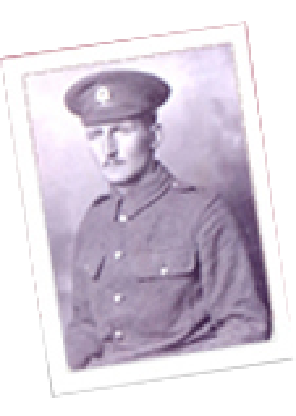
- First Name(s):GeorgeEdward
- Surname:TAYLOR
- Service Number:17262
- Rank:
Corporal
- Conflict:WW1
- Service:Army
- Army Sector:Infantry
- Regiment:Worcestershire Regiment
- Battalion:9th Battalion
- Former Units:None
- Date of Death:10th April 1916
- Age At Death:
- Cause of Death:Died of wounds
- Place of Death:Unknown
- Place of Burial:Amara War Cemetery, Iraq, Grave VI. J. 10.
- Place of Birth:Bishampton, Worcestershire, resident Harvington, Worcestershire, enlisted Worcester
- Home Town:Unknown
- Casualty's Relatives:Unknown

TAYLOR George Edward Is Named On These Memorials
Further Information About TAYLOR George Edward
George Taylor was born in Bishampton, the son of George and Jane Taylor but was living in Harvington (1901 census, Village Street) when war broke out and he volunteered in September 1914 quite possibly with Frank Cook, William Marsh and Walter Hancock for he joined the 9th Battalion Worcestershire Regiment, which was part of 39th Brigade, 13th Division. On the 16th February 1916, the Division, which was then based in Port Said, Egypt, left for Mesopotamia, part of the Ottoman (Turkish) empire, which had entered the war on Germanys’ side in October 1914. British forces had captured Basra in late 1914 and begun to advance on Baghdad but had been stalled at Ctesiphon and withdrawn to Kut-al-Amara 200 miles north of Basra where they were besieged. In a (yet another) attempt to lift the siege the 13th Division, which had arrived in the area on the 27th March, attacked on the 5th April. The Worcesters, who were still so weakened by their exertions in Gallipoli that they had to be brought up to strength by troops transferred from the North Staffordshire Regiment, successfully attacked the Turkish positions at Hanna on the 5th April. They then attacked the next enemy line a mile or so away at Falahiya, which was much more vigorously defended and were fought to a standstill. The next day an Indian division (7th Meerut) relieved them in ferocious fighting in which they lost 1200 men in 20 minutes. The following day (7th April), it was the turn of the 13th Division to relieve the 7th Division and they renewed the attack on the 8th April but again were unable to make headway. Fighting continued for about another fortnight without success. The garrison at Kut surrendered on the 29th April 1916. The garrison was the 6th Poona Division and of the 2,600 British troops 1,700 died in captivity, of the 9,300 Indian troops, 2,500 died.
George Taylor was probably wounded between the 5th and 9th April and is recorded as dying of wounds on the 10th April. He is buried at Amara on the left bank of the Tigris 300 miles from the sea. A memorial service was held for him at Harvington on the 7th May 1916. He was 23 years of age.
A photograph of Corporal G.E. Taylor of Harvington can be found in Berrow’s Worcester Journal Supplement, Saturday 13th May 1916, available at Worcestershire Archives.
If you have any information about TAYLOR George Edward, please get in touch
Information AboutTAYLOR George Edward
Credits: Researched by Alan W. Stephens. Berrow's Worcester Journal Supplement Supplement researched by Sandra Taylor.