
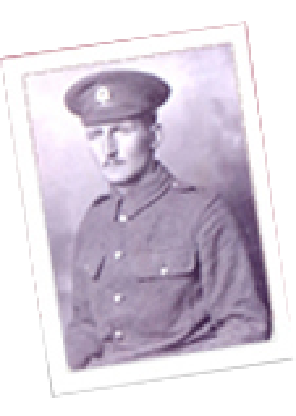
- First Name(s):Thomas
- Surname:REA
- Service Number:15858
- Rank:
Private
- Conflict:WW1
- Service:Army
- Army Sector:Cavalry
- Regiment:12th Hussars (Prince Albert's Own)
- Former Units:None
- Date of Death:7th June 1917
- Age At Death:28
- Place of Death:Unknown
- Place of Burial:Doullens Communal Cemetery Extension No. 1, France, Grave V. D. 64.
- Place of Birth:Unknown
- Home Town:Unknown
- Casualty's Relatives:
Son of Frank and Phyllis Rea, 77 Blakefield St. John’s, Worcester
An Image Of this Grave Is Available To Order
Order Grave's Image

REA Thomas Is Named On These Memorials
Further Information About REA Thomas
Thomas Rea was the son of John Francis “Frank” Rea [born 2nd March 1858, St John’s, Worcester; died 27th November 1948, Hallow, Worcester] and his wife Phyliis Martina (nee Glen) Rea [born 1859, Bosbury, Herefordshire; died September 1927, Worcester].
Thomas was born in 1889 in Astwood [South Claines] Worcestershire the second eldest son of ten children and by 1891 Thomas’s father and mother are both recorded as being employed as Weavers living at No 2 Brickfields Road, St Martin’s, Worcester. By 1901 the family had moved house in Worcester living in St John’s where Thomas’s elder brother John was employed locally as a Saddlers Porter. By 1911 the family is recorded as living at No 77 Blakefield Road, Worcester where aged 22 Thomas is recorded as being employed locally as an Under Gardener for Mr Wood with his father as a Gardener for Mr Armstrong.
Thomas is believed to have enlisted into the 11th Hussars at Nuneaton after war had been declared and a year after the Regiment under command of Lt-Col. Thomas Taite Pitman arrived in France on the 16th August 1914 at Le Havre with Thomas arriving on the 17th October 1915.
In 1915 the Regiment was in Flanders and was involved in the Second Battle of Ypres seeing action at the Battles of Frezenberg on the 13th May and Bellewaarde on the 24th May before seeing action during the Battle of Loos [25th September-8th October] from which the 11th Hussars withdrew from, on the 3rd October.
The Regiment withdrew to an area twelve miles west of St Omer which was intended to be their winter billeting area with “B” Squadron going to Affringues and it was here when Thomas joined the Squadron. Thomas was one of one hundred reinforcements who came to the front from the ‘Base Depot’ and upon their arrival they were formed into a trench digging party which dug trenches in the Forest of Clairmarais which was part of the reserve line being constructed between Bethune and Watten. Christmas 1915 was spent at Estrelle before they moved forward into trenches near Vermelles in early 1916 in an area which the British had captured the year before at the Battle of Loos on the western edge of the Hohenzollern Redoubt. At the end of June the Regiment moved to the Somme and was present during the Battle [phases] of the Somme [1st July-18th November] at the Battle of Flers-Courcelette on the 15th September afterwards billeting at Enocq for the winter.
In January 1917 the 11th Hussars supplied a Pioneer Company of two hundred and forty all ranks to assist in railway construction, leaving on the 2nd January 1917 for St Pol whence it marched to billets at Ligny St. Flochel. Along with other Pioneer Companies formed from other Regiments within the 1st Cavalry Brigade it was employed until the 14th March 1917 working to double the railway line between St. Pol and Arras for the forthcoming Arras Offensive later that year.
On the 8th April 1917 the Regiment had arrived at the village of Agnieres a small village close to Aubigny a few miles from Arras where the Arras Offensive would begin the following day on Easter Monday 9th April. During the Arras Offensive the Regiment would see action near Monchy-Le-Preux and Fampoux [Greenland Hill] until due to the weather, losses and the condition of the horses the Brigade was moved back to Auchy-Les-Hesdin via Agnieres arriving on the 16th April.
On the 7th June 1917 the Third Battle [phases] of Ypres began with the first phase being the Regiment’s old 1914 Battle Ground of Messines with the 11th Hussars still at Lapugnoy, and also the date recorded of Thomas’s death. It is unclear how Thomas died but it is likely that Thomas died of either wounds, illness or due to an accident at either the 3rd Canadian Stationary Hospital or the 2nd/1st Northumbrian Casualty Clearing Station.
If you have any information about REA Thomas, please get in touch
Information AboutREA Thomas
Credits: Additional information courtesy of David Eason and Mark Chambers.