
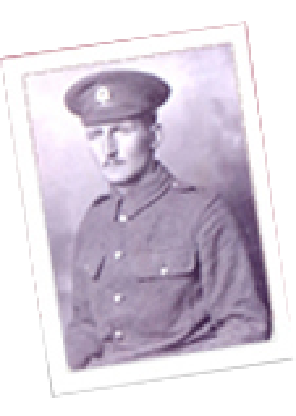
- First Name(s):CharlesEvered
- Surname:PREECE
- Service Number:Unknown
- Rank:
Lieutenant
- Conflict:WW1
- Service:Air Force
- Air Force:Royal Air Force
- Air Force Unit:2 Squadron
- Former Units:Formerly 1863, Queen's Own Worcestershire Hussars (Worcester Yeomanry).
- Date of Death:18th February 1919
- Age At Death:23
- Cause of Death:Accident - Flying
- Place of Death:Near Shrewsbury
- Place of Burial:Hanley Castle (St. Mary) Churchyard Extension, Worcestershire, England.
- Place of Birth:Unknown
- Home Town:Unknown
- Casualty's Relatives:
Son of John and Ada Louisa Preece, of The Ivy House, Hanley Castle

PREECE Charles Evered Is Named On These Memorials
Further Information About PREECE Charles Evered
Mobilised August, 1914. Served in Egypt and in France.
Appears in the Worcester/Worcestershire Roll of Honour Book for army casualties located in Worcester Cathedral under Hanley Swan.
C.E. Preece 1st/1st Worcester Yeomanry, 2nd Draft, embarked at Devonport 15th November 1915 for service with the Mediterranean Expeditionary Force, disembarked at Alexandria, Egypt on 6th December 1915. Granted Commission R.F.C. 1917, killed flying 1918.
Source for additional information: The Yeomanry Cavalry of Worcestershire 1914 – 1922.
The following information has been researched and transcribed by Mick Wilks:
Youngest son of Mr John and Mrs Ada Louise Preece of The Ivy House, Hanley Castle. Lieutenant Preece was killed, together with First Class Mechanic Harry Welsh of Ladywood, Birmingham, in a flying accident near Monkmoor Aerodrome, Shrewsbury. At an inquest held by the Shrewsbury Coroner, Flight Sergeant Bowater explained that he received instructions at about 11.00 am from Lt Preece to get his machine ready for flying. He did so and started the engine at 12.15 am. Lt Preece expressed himself satisfied with the way the engine was running, taxied from the aerodrome and ascended. Harry Welsh did not see the accident but saw the machine after it fell in a field about a quarter of a mile from the aerodrome. It was then on fire. Harry Welsh said that he had known Lt Preece for some considerable time and in his opinion was an exceedingly capable pilot. A Mr C. Edwards, who happened to be in a field adjoining the airfield at the time, said that he saw the machine crash, but on running to the wreck was unable to render any assistance owing to the flames. The Coroner reached a verdict of accidental death.
Monkmoor Aerodrome was constructed on the orders of Field Marshal Haig, Commander in Chief of British Forces on the Western Front to accommodate the Observers School of Reconnaissance and Aerial Photography (OSRAP) after he had demanded his own Army Air Squadron to reconnoitre the entire Western Front to a depth of 30 miles behind enemy lines. The airfield had no other function! Twelve observers were chosen on the results of examinations and practical work while flying, for the first course at the airfield. One of those trainees who arrived in September 1918 for the six week course was Wilfred Thompson (later Reverend), who recalled that he was due for a training flight with Flight Lieutenant Preece, his favourite instructor, shortly before being due for posting to France on 13th November. However, the day turned out to be stormy and the flight was cancelled. He was later to hear that Lieutenant Preece had been killed while flying a de Havilland 9a that had stalled at 200 feet, after take-off. The airfield at Monkmoor was apparently closed soon after the war ended and was not used again for flying.
Lieutenant Preece had been a private (No.1836) in The Queen’s Own Worcestershire Hussars (Yeomanry) before the outbreak of war. He had been mobilised in August 1914, embarked at Devonport on 9th April 1915 for Alexandria, Egypt, returning to England in August 1915 as medically unfit. He returned to Alexandria in December 1915, became Lance Corporal in April 1916 and was posted to Home Establishment from November 1916. He was Gazetted in March 1917 and served with No.2 Squadron Royal Flying Corps in France from August 1917 to July 1918. He was then posted to the Observers OSRAP RAF Monkmoor. Upton News reported that he was most popular and highly regarded by both his brother officers and by the men.
Mr and Mrs Preece had already suffered the loss of their eldest son, Lance Corporal Ernest Preece, Royal Fusiliers, who had died as a result of severe wounds received in August 1916, during the ‘big push’. (This was the battle of the Somme). Their only surviving son, Lieutenant Roland J Preece was also in the RAF during the war.
Charles Preece was awarded the 1915 Star and British War and Victory Medals.
Sources: Commonwealth War Graves Commission, Medal Index Card, Worcester City Museum Yeomanry records, Upton upon Severn News and Bernard Lowry.
A photograph of Lieutenant C.E. Preece of Hanley Castle can be found in Berrow’s Worcester Journal Supplement, Saturday 1st March 1919, available at Worcestershire Archives.
If you have any information about PREECE Charles Evered, please get in touch
Information AboutPREECE Charles Evered
Credits: Researched by Brian Hill and Sandra Taylor.