
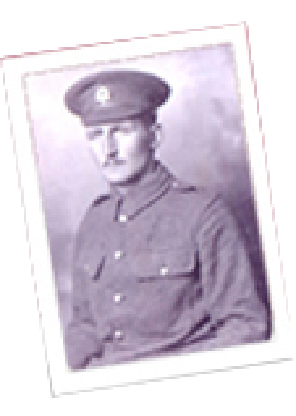
- First Name(s):JosephVernon
- Surname:PRATT
- Service Number:1817
- Rank:
Sergeant/Saddler
- Conflict:WW1
- Service:Army
- Army Sector:Cavalry
- Regiment:1st/1st Queen's Own Worcestershire Hussars (Worcester Yeomanry)
- Former Units:None
- Date of Death:26th December 1916
- Age At Death:25
- Place of Death:2nd War Hospital, Manchester
- Place of Burial:Upton-On-Severn Cemetery, Worcestershire, England, South part on West boundary.
- Place of Birth:Unknown
- Home Town:Unknown
- Casualty's Relatives:
Son of Joseph and Isabella Pratt, of Mandy Lodge, Avenue Road, Malvern

PRATT Joseph Vernon Is Named On These Memorials
Notes About The Memorial(s) Listed Above
Upton on Severn Memorial Hall with the additional information: Sergt
Worcester Cathedral Worcestershire Hussars with the information: Saddler-Sergt
Hanley Castle Grammar School now Hanley Castle High School WW1 Memorial as V.J. Pratt.
Further Information About PRATT Joseph Vernon
Saddler Sergeant J.V. Pratt 1st/1st Worcester Yeomanry, embarked at Avonmouth 9th April 1915 for service with the Mediterranean Expeditionary Force, disembarked at Alexandria, Egypt on 24th April 1915. Wounded 23rd April 1916 (severe), died 26th December 1916.
Source for additional information: The Yeomanry Cavalry of Worcestershire 1914 – 1922.
The following information was researched and transcribed by Mick Wilks:
Eldest son of Mr and Mrs J. Pratt of Old Street, Upton on Severn.
In recording his death, the Upton on Severn News reported that Sergeant Pratt, like his father, was a saddler by trade, had been educated at Hanley Castle Grammar School and was set fair to make great strides in the commercial world, having been a silver medallist in connection with the Master Saddlers’ Association. Sergeant Pratt had joined the Worcestershire Yeomanry prior to the war.
Yeomanry records indicate that Sergeant Pratt embarked at Avonmouth on 9th April 1915, arriving at Alexandria on the 24th. He then embarked for Gallipoli on 14th August 1915, returning to Alexandria on 13th October. Here he was re-engaged on 12th December 1915 for four years or the duration (of the war). He was posted as missing at Qatia on 23rd April 1916 and found wounded on the 29th. Initial treatment was given in the 31st General Hospital, Port Said, where his condition was described as dangerous, with a gun shot wound to his right thigh, which had a compound fracture, and a bullet wound in the left shoulder. He was declared out of danger on 9th July 1916 and was admitted to the 27th General Hospital, Abbassieh, on 23rd August, before embarking for England on Hospital Ship, Gloucester Castle, on 30th September. He died of pneumonia in the 2nd War Hospital, Manchester, on 26th December 1916.
Behind these bare facts lies a story of endurance, as well as hope and then despair for his parents. The Daily Sketch and, in turn, the Upton on Severn News recorded Sergeant Pratt’s story of survival, largely in his own words, as follows:
‘FIVE DAYS IN THE DESERT
Terrible Experience of Wounded Soldiers
LEFT TO THEIR FATE BY THE TURKS’
Five days lying wounded in the desert, with only a little water brought to him every day by an old Arab woman was the terrible experience S. Sergeant Joseph Vernon Pratt, of the Worcestershire Yeomanry, whose home is at Upton on Severn.
He is now lying in a Manchester hospital and to the Daily Sketch he described the tragedy which overtook two squadrons of Worcestershire Yeomanry and some Royal Engineers near Katia, on the eastern side of the Suez Canal, on Easter Sunday last.
The Yeomanry had left Katia, he said, as a covering party for the Engineers, who were going to sink wells. At dawn, on Easter Sunday, their camp was rushed by a strongly armed force of over 1000 Turks and Bedouins. Taken by surprise, overwhelmed and outnumbered, the Yeomanry suffered severely.
About half a dozen badly wounded men were left behind when the Turks went on to Katia, including Sergeant Pratt. The Turks bandaged their wounds, carried them to the shelter of a few scattered palm trees, and left them. Sergeant Pratt, wounded in the shoulder and hip, lay on the ground, unable to get up. “There was an Engineer with me”, he said, “A plucky little chap. I don’t remember his name, but he was a Scot. He was badly wounded in the face. An old Arab woman, one of those nomads who are always wandering about the desert, found us and brought us water from the well.
One day she didn’t come, but the Scotsman managed to drag himself to the well. I didn’t lose consciousness, though the days went by in a sort of haze. Once we had a narrow squeak. A party of Bedouins, who are regular desert pirates and cut throats came across us and wanted to put an end to our misery. They were only stopped by their leader.
On Thursday, I saw a horseman on the sky-line. I lifted my helmet, waved it and shouted as well as I could in my weak state. Sound carries in the desert.
He heard me and I heard him shout something about coming down. He was one of a troop of Australian Light Horse who happened on us accidentally. We were taken to hospital at Kantara and then to Cairo. My companion, I am sorry to say, died.”
The Upton on Severn News subsequently reported Sergeant Pratt’s death, in Manchester, as a result of the injuries received at Katia as follows:
‘…It will be remembered that on Easter Sunday, the Yeomanry were very severely handled by a large body of Turks officered by German officers, and in this engagement Sergeant Pratt was severely wounded, being left in the desert for four days before succour came to hand. When relief eventually arrived, Sergeant Pratt was very exhausted from privations and his wounds, but after treatment in hospital in Egypt became considerably better and was brought over to England, where his injuries necessitated several operations which were successfully carried out, and it was thought that recovery would be complete. The progress, however, was not maintained, and the end came on Wednesday following a serious operation…’
Saddler Sergeant Pratt’s funeral in Upton was subsequently reported by this newspaper as follows:
‘…The esteem and regard in which the deceased and his parents are held in the district was shown by the large attendance both at the Parish Church, where the first part of the service was held and at the Cemetery, where the last honours of a fallen soldier were accorded by an escort of Royal Engineers who fired three volleys after the committal service had concluded, the “Last Post” being sounded by a trumpeter… at its conclusion (the service in the church), the coffin, which was covered in a Union Jack, was borne by six of the deceased comrades from the church to the Cemetery. Along the route many sympathetic spectators had lined the roadway, whilst throughout the town, blinds were drawn in silent token of respect. The grave was lined with evergreens and white chrysanthemums…’
The coffin bearers are listed as: Sergeant Major C T Underhill (Yeomanry), Sergeant Major E A Jones (Yeomanry), Bandmaster W H Austin (Royal Fortress Artillery), Sergeant W Wesson Davenhill (Yeomanry), Sergeant J Rawlinson (Worcestershire Regt), Sergeant W R Bishop (Yeomanry), Corporal Bunegar (Yeomanry) and Trooper Millington (Yeomanry).
He was mentioned in a despatch from General Sir A.J. Murray GC MC KCB CVO DSO of 28th June 1917 for gallant and distinguished service in the Field. Winston Churchill, then the Secretary of State for War had a command from the King to record His Majesty’s high appreciation of the services rendered. The Mention in Despatches was gazetted on 30th April 1919.
Sources: Commonwealth War Graves Commission, Soldiers Died in the Great War, the Yeomanry records at Worcester City Museum archive and the Upton on Severn News.
A photograph of Staff Sergeant J.V. Pratt of Upton can be found in Berrow’s Worcester Journal Supplement, Saturday 11th November 1916, available at Worcestershire Archives.
If you have any information about PRATT Joseph Vernon, please get in touch
Information AboutPRATT Joseph Vernon