
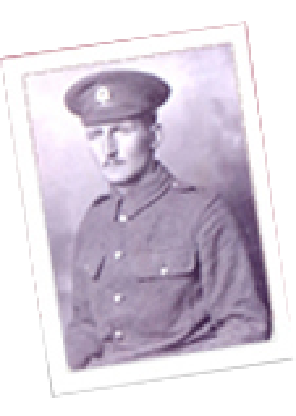
- First Name(s):Gilbert
- Surname:PENNINGTON
- Service Number:260105
- Rank:
Private
- Conflict:WW1
- Service:Army
- Army Sector:Infantry
- Regiment:Gloucestershire Regiment
- Battalion:1st/5th Battalion
- Former Units:Formerly 6180, Suffolk Regiment as Gilbert PENNINGHAM.
- Date of Death:28th September 1917
- Age At Death:30
- Place of Death:Unknown
- Place of Burial:Ribbesford (St. Leonard) Churchyard, Worcestershire, England, Grave 564.
- Place of Birth:Tottington, Lancashire, enlisted Worcester
- Home Town:Unknown
- Casualty's Relatives:
Son of the late Thomas Pennington (Surgeon) of Wribbenhall; husband of Alice Pennington, 16 Wyre Hill, Bewdley, Worcestershire
An Image Of this Grave Is Available To Order
Order Grave's Image

PENNINGTON Gilbert Is Named On These Memorials
Further Information About PENNINGTON Gilbert
Appears in the Worcester/Worcestershire Roll of Honour Book for army casualties located in Worcester Cathedral as Gilbert Permington with the information: 260165 The Gloucestershire Regiment.
1911 Census
Wribbenhall, Bewdley
Thomas Pennington, head, age 53, Durgeon, born Hyde, Cheshire
Hannah Bales Pennington, wife, age 53, number of years married not given, 6 children, 5 still living 1 died
Gilbert Pennington, son, age 22, Cabinet Maker, born Tottington, Lancashire
Dorothy Mary Pennington, daughter, age 13, born Wribbenhall, Worcestershire.
Gilbert Pennington enlisted as Private 16380 in the Worcestershire Regiment on 3rd September 1914 at Bewdley. On his attestation form he gave his place of birth as Tottington, Bury, Lancashire, his age as 26 years 62 days, his occupation as a carpenter and his next of kin as his father Thomas and mother Hannah of Wribbenhall, Worcestershire. He had 4 years military service with the Worcestershire Territorial Artillery and had enlisted due to being a National Reservist. Gilbert was 5 feet 8½ inches tall with blue eyes, brown hair and a fresh complexion. On 13th March 1915 he was discharged from the regiment as ‘Not likely to become an efficient soldier due to defective vision’.
The Medal Index Card for Gilbert Pennington records his service as Private 242133, Suffolk Regiment and Private 260105, Gloucestershire Regiment. He was awarded the British War Medal and the Victory Medal.
The following information has been researched by Joe Devereux:
Died of wounds at the Royal Victoria Hospital, Netley. Husband of Alice Pennington. (Soldiers Effects – Ancestry)
Born, Tottington, Bury. Son of Thomas and Hannah Pennington of Wribbenhall, Bewdley. He originally enlisted in Bewdley on 3/9/14 as No 16380 and was posted to 6 Worcs Regt. Aged 26 years 62 days at enlistment, occupation carpenter, height 5′ 9″, weight 114lbs with good physical development, complexion fresh, eyes blue, hair brown, religion CofE. He stated that he had previously served for 4 years with the Worcs Territorial Artillery – 2nd South Midland Brigade RFA. Served at Tregantle, Cornwall 3/9/14-17/12/14 and Devonport 17/12/14-13/3/15. Discharged ‘not likely to become an efficient soldier’ 13/3/15 – this was due to defective vision (astigmatism).
His re-enlistment papers have not survived.
Bewdley residents will learn with regret that Private Gilbert Pennington, second son of Mrs Pennington, and the late Dr Pennington, of Bewdley, succumbed on Friday, September 28, to wounds received in action. His death took place at Netley Hospital, where he was brought 6 weeks ago. Private Pennington, who was 29 years of age, was on the National Reserve before the outbreak of war, and joined the forces proper in December 1914. After spending some time in the Army, he was discharged, but rejoined less than 6 months ago and was almost immediately drafted to France again. Originally he was with the Worcesters, but at the time he was wounded he was with the Gloucesters. During one of the recent advances in August, he was wounded by gunshot in the chest and brought to Netley, where he was visited by relatives who had hopes of his recovery. However, to the general regret he passed away on Friday, as above stated. The body was brought to Bewdley on Monday evening and the interment took place in Ribbesford Cemetery on Wednesday. He was well-known in Bewdley and the funeral created a good deal of sympathetic interest. He has 3 brothers in the service, but unfortunately only one was in England and able to attend. Sgt Arthur Pennington, stationed in the East Coast, was present. Lance Corporal Charles Pennington is in France and was on leave a short time ago, while Sgt J. Edward Pennington, of the Royal Fusiliers, sailed last week, for Africa. In civil life, Private Gilbert Pennington was a cabinetmaker, employed by Mr E. Perks, Park Lane, but since his discharge he had worked in Shropshire. Photo
His marriage to Alice Potter was registered in 1916 under the Kidderminster Registration District.
Served :
1/4 Suffolk Regt 242133/6180
1/5 Glos Regt 260105
Glos TF 2421
KILLED/WOUNDED AT THE BATTLE OF LANGEMARCK
The following is an extract from 1/5 Glos Regt War Diary:-
ST. JULIEN.
16/8/17.
ZERO hour, 4.45 a.m. the Attack commenced with a barrage. The first objective, namely BORDER HOUSE, Gun Pits on S and N sides of ST. JULIEN – WINNIPEG road was soon gained. Machine guns in JANET FARM and in positions in rear prevented any further advance. A house containing a M.G. was still held by the enemy. This was cleared with Rifle Grenades and a Lewis Gun & was occupied. By this time the barrage had left us behind & many casualties had been caused. The Battalion therefore dug in its present position. A weak counter-attack was stopped with Lewis Gun & rifle fire. During the day enemy snipers were very active & caused us some casualties.
17/8/17.
During the night the 8th WARWICKS took up a line of posts about 100 yds in Advance of our posts. We remained in as support till the evening when we came out, & proceeded to DAMBRE camp, stopping for a hot meal at REIGERSBURG camp. Our casualties were 1 officer killed, 1 officer missing, 6 officers wounded. 209 Other Ranks killed, missing & wounded.
The following is an extract from ‘The Gloucestershire Regiment in the Great War 1914-1918’ by Everard Wyrall
THE BATTLE OF LANGEMARCK, 1917: 16th – 18th AUGUST
The second attack was launched east and north of Ypres at 4.45 a.m. on the 16th August on a front extending from the north-west corner of Inverness Copse to south of St. Jans Hoek, where we joined up with the First French Army.
The 48th Division was in the left centre of the attack, having the 36th Division on the right and the 11th Division on the left. The 145th Brigade was to assault the enemy’s positions, the 143rd and 144th Brigades being in reserve to assist the 145th or act on its flank if necessary.
There were three objectives, i.e. Green, Red (or Pink as it is called in the Brigade orders) and Blue Lines.
The Brigade was to attack with three Battalions in the front line, i.e. 1/5th Gloucesters (right), 1st Bucks Battalion (centre) and 1/4th Oxford and Bucks (left): the 1/4th Berkshires were in support (in artillery formation) in rear of the Gloucesters and Bucks Battalion.
The first objective – the Green Line – followed roughly the Winnipeg-Langemarck road: the second objective – Red Line – was the line of German trenches beyond the above road: the third objective – Blue Line – ran from Clifton House, thence Tirpitz Farm, Stroppe Farm, Hubner Farm, Flora Cott and the point about 350 yards south-east of New Houses.
Each battalion was to attack in four waves on a two-company front, each company on a two-platoon front.
Under cover of troops of the 143rd Brigade, located 150 yards east of the Steenbeek, the first two waves were to deploy east of the stream, the remaining two waves between the stream and a line 250 yards west of it.
For the first time the Territorials were to come up against a new form of defence which Sir Douglas Haig in his despatches described as follows:
The difficulty in making deep, mined dug-outs in soil where water lay within a few feet of the surface of the ground had compelled the enemy to construct in the ruins of farms and in other suitable localities a number of strong points or ‘pill boxes’, built of reinforced concrete often many feet thick. These field posts, distributed in depth all along the front of our advance, offered a serious obstacle to progress. They were heavily armed with machine-guns and manned by men determined to hold out at all costs.’
There were several of these ‘pill boxes’ along the 145th Brigade front, there were also a number of old gun-pits which had been adapted to hold machine-guns.
The 1/5th Gloucesters (who had already spent a short time in the front line from the 5th to 8th August) moved up on the night of the 15th/16th first to St. Julien and then to their positions of deployment.
C Company was on the right and A on the left, forming the first and second waves: D Company on the right and B on the left formed the third and fourth waves. The latter Companies were in artillery formation.
At 8.45 p.m. on the night before the battle the enemy’s guns opened fire and continued in bursts up to zero hour on the 16th. This shell-fire fell heavily on the whole area between the Blue Line and the Steenbeek and did not improve the conditions under which the troops assembled for the attack. Heavy rain had already turned the ground almost into a morass and the ‘going’ was likely to be difficult.
However, the Brigade succeeded in deploying west of the Steenbeek with practically no losses. Tapes for deployment had been laid out west of the stream and others had been put down to certain bridges to guide the advance. The original intention was to lay tapes east of the stream, but the Royal Engineer officers reported the enemy too close to permit of that being done.
Just before zero the leading waves moved across the stream and punctually at 4.45 a.m. the advance began.
Under an excellent artillery barrage the 1/5th Gloucesters reported that Border House and Gun Pits on the north and south side of the St. Julien-Winnepeg road were soon gained, but the attack was then held up by machine-gun fire from, and in rear of, Janet Farm. From a house on the St. Julien-Keerselare road also, heavy fire was opened on the attackers, but the latter, using rifle grenades and with Lewis-gun fire, silenced the enemy and occupied the house.
The check to the Battalion was caused by ‘pill boxes’ from which, untouched by our artillery fire, hostile machine-guns raked the advancing infantry with cross and flank fire. By the time a fresh advance was attempted the barrage had got too far ahead and all that could be done was to dig in on the ground gained. The enemy then launched a small counter-attack which was broken up immediately by Lewis-gun and rifle-fire.
On the right of the Gloucesters the 36th Division had failed to come up and a defensive flank had to be formed, reinforcements from the 1/4th Berkshires being sent up to the former Battalion for that purpose.
The 145th Brigade dug in on the line Border House-Jew Hill-Gun Pits-eastern edge of northern part of St. Julien-Hillock Farm -100 yards west of Mon du Hibou. No further advance was made from this line throughout the 16th and when, during the evening of the 17th, the 8th Warwicks arrived and took over the line, the Gloucesters still held their positions.
The Battalion had been heavily sniped, which added further to the heavy casualties already suffered.
On relief the 1/5th Gloucesters moved back to Dambre Camp, stopping for a hot meal enroute at Reigersburg Camp. They came out of the line having lost 1 officer killed, 1 missing and 6 wounded: their losses in other ranks were 209 killed, wounded and missing. Only 4 officers, exclusive of Battalion Headquarters, survived this battle. Many new N.C.O.s had to be made.
Neither the 1/4th nor the 1/6th were engaged in this action: the former was at Reigersburg Camp from the 16th to the 18th August, while the latter was at Reigersburg Camp on the 16th, on the Canal bank on the 17th and in support trenches in the old German line on the 18th.
PENNINGTON Thomas of Wribbenhall Bewdley Worcestershire died 5 January 1915 at Ivy Cottage Wribbenhall Probate London 7 April to Hannah Bates Pennington widow. Effects £189 10s. (National Probate Calendar – Index of Wills and Administrations)
1911 Census
Gilbert Pennington
Age: 22
Occupation: Cabinet Maker
Address: Ivy Cottage, Wribbenhall, Bewdley – the dwelling had 8 rooms
Estimated Birth Year: 1889
Where born: Tottington, Lancs
Father’s Name: Thomas Pennington 53, surgeon, b. Hyde, Cheshire
Mother’s Name: Hannah Pennington 53, b. Willenhall, Staffs
Dorothy Mary Pennington, b. Wribbenhall
His parents had been married for ?? years – 5 of their 6 children had survived.
1901 Census
Gilbert Pennington
Age: 12
Estimated birth year: abt 1889
Address: 7 Pewters Alley, Wribbenhall
Father: Thomas Pennington, 43
Mother: Hannah B Pennington, 43
Birth Place: Tottington
Charles Pennington 13
Gilbert Pennington 12
Arthur Pennington 11
James E Pennington 9
Dorothy M Pennington 3
Mabel Lloyd 17
If you have any information about PENNINGTON Gilbert, please get in touch
Information AboutPENNINGTON Gilbert