
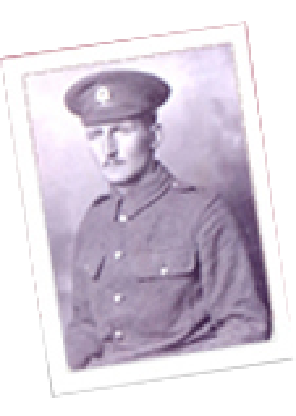
- First Name(s):EdwinRichardHampton
- Surname:LEWIS
- Service Number:Unknown
- Rank:
Second Lieutenant
- Conflict:WW1
- Service:Army
- Army Sector:Infantry
- Regiment:Worcestershire Regiment
- Battalion:7th Battalion
- Unit:Z Company
- Former Units:None
- Date of Death:25th April 1917
- Age At Death:25
- Cause of Death:Died of wounds
- Place of Death:Unknown
- Place of Burial:Duisans British Cemetery, Etrun, France, Grave III. F. 37.
- Place of Birth:Unknown
- Home Town:Unknown
- Casualty's Relatives:
Son of the Reverend Edwin and E. Frederica Lewis, of Hampton Lovett Rectory Droitwich, Worcestershire
An Image Of this Grave Is Available To Order
Order Grave's Image

LEWIS Edwin Richard Hampton Is Named On These Memorials
Notes About The Memorial(s) Listed Above
Worcester Kings School WW1 Memorial as E.R.H. Lewis.
Worcester Cathedral Cloister Windows Kings School as E.R.H. Lewis.
Worcester Cathedral Cloisters Chorister Window as E.R.H. Lewis.
Hampton Lovett St Mary and All Saints Church as Richard Hampton Lewis.
Hampton Lovett St Mary and All Saints Church Lewis Memorial as Edwin Richard Hampton Lewis.
Further Information About LEWIS Edwin Richard Hampton
2nd Lieut., Worcester Regt.
Born, July 19, 1891. Fell in France, April 10, 1917.
Dick Lewis was the surviving son of the Reverend E. Lewis, Rector of Hampton Lovett. He entered the School House from the Choir School in September, 1906, in the Lower Fifth and left at the top of the Sixth in July, 1910, as Colquitt Scholar of B.N.C., Oxford and Cattley Exhibitioner. Throughout his school time he set a remarkable example of industry and loyalty, and public spirit. By dogged perseverance and unfailing keenness he made himself effective in all that he undertook. He was for two years in the football team and which he captained most successfully in 1909; was in the First XI., Lance-Corporal in the O.T.C., won Distinction in the Higher Certificate, and was a splendid head of the School House. At Oxford he maintained his reputation for good work and healthy influence, and took high honours in Theology. Always aiming at Holy Orders and missionary work, he then served for two years as a layman in the Archbishop’s Mission in Canada. There he did a remarkable work amongst boys and published an account of his experiences, “Scouting in the North-West, “which was warmly welcomed by General Baden Powell. At the expiration of his term of service in September, 1915, he returned to England, and instead of being ordained as he had arranged in December of that year, he applied for a commission in the Worcestershires feeling it his duty to serve his country and he was soon accepted. From November, 1915, to September, 1916, he was in training, when he was sent to the front to join a battalion of the Worcestershires. He was invalided home from Boulogne Base Hospital to King’s College, through overstrain, but by the first week in December, 1916, was back at the front with the Worcestershires. In April a shell fell in his company dug-out, which killed his schoolfellow, Aldana, and wounded all the other officers. Dick Lewis died of his wounds a few days later. The Chaplain of the Regiment wrote of him: “I shall always treasure his memory and his example as an inspiring memory. His influence upon the men for good was very great, and I know it will live on. His unrealised hopes I am sure will receive some adequate fulfilment in the hereafter.” His Captain writes: “I am writing to express my deepest sorrow with you in the loss in action of your son. He had been with us several months. His strong personality and cheerfulness made him a favourite with us all.” Lieutenant Colonel E. Kerans, writing to Mrs. Lewis, says: “On behalf of my brother officers and men of the regiment, I offer you our deepest sympathy at the great loss which has befallen you in the loss of your son. He was a great favourite with us all, and was a hard-working, reliable officer.” “A wonderful life, faithful, strenuous and fruitful,” writes one who knew him best. He was a boy and man of marked personality, deeply respected by all who came into contact with him. Few boys have exercised a healthier influence on their generation, and his loss to the Church and Mission Field is great indeed. “We doubt not that for one so true
There must be nobler work to do.”
W. H. C.
Source for additional information: The Vigornian, June 1917, No.89, Vol.VIII
Second Lieutenant Edwin R.H. Lewis was one of the officers killed in the same action as Lieutenant Aldana. From April 15th – 19th 1917, the battalion was resting in the cellars of Arras, leaving the city during the afternoon of 19th April. Heavy shellfire across the intended route at Feuchy Chapel delayed all the companies but eventually the bombardment slackened and the allotted reserve trenches were occupied just before dark. Those trenches were close to the positions of the British heavy guns and were heavily bombarded the next day resulting in the loss of several officers including Second Lieutenant Lewis.
Source for additional information: The Worcestershire Regiment in the Great War, by Captain H. FitzM. Stacke, 1928.
The following report appears in the Bromsgrove Weekly Messenger, 5th May 1917:
Lieutenant Dick Lewis. Died of wounds. Younger and only surviving son of Rev. Edwin Lewis, Rector of Hampton Lovett. He was dangerously wounded in the fighting last week and he has succumbed to his wounds. Attached to a clerical mission in Canada, whence he volunteered. Elder son, a tutor, died in France some 5 or 6 years ago.
Kidderminster Times 19th May 1917:
E.R.H. Lewis, Worcestershire Regiment. Died of wounds received in action. Only surviving son of Rev. Edwin Lewis, Rector of Hampton Lovett. The report includes a photograph of Edwin Lewis.
A photograph of Lieutenant E.R.H. Lewis of Hampton Lovett can be found in Berrow’s Worcester Journal Supplement, Saturday 12th May 1917, available at Worcestershire Archives.
If you have any information about LEWIS Edwin Richard Hampton, please get in touch
Information AboutLEWIS Edwin Richard Hampton
Credits: Bromsgrove Weekly Messenger and Kidderminster Times researched by Adrian Carter.