
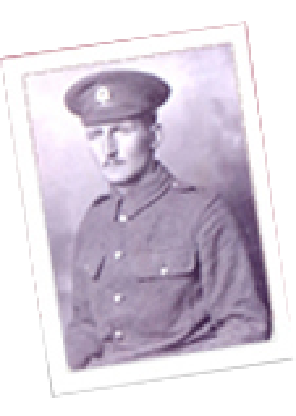
- First Name(s):WilliamEdwin
- Surname:JONES
- Service Number:12223
- Rank:
Lance Corporal
- Conflict:WW1
- Service:Army
- Army Sector:Infantry
- Regiment:Worcestershire Regiment
- Battalion:4th Battalion
- Former Units:None
- Date of Death:30th April 1915
- Age At Death:21
- Place of Death:Unknown
- Place of Burial:Commemorated on Helles Memorial, Turkey, Panel 104 to 113.
- Place of Birth:Unknown
- Home Town:Unknown
- Casualty's Relatives:
Son of David and Mary Ann Jones, 22 Wakeman St., Barbourne, Worcester

JONES William Edwin Is Named On These Memorials
Notes About The Memorial(s) Listed Above
Listed on Worcester St Clements School as W.E. Jones.
Listed on Worcester Guildhall as W. Jones
Listed on Worcester St Stephen’s Church as William Jones
Further Information About JONES William Edwin
A photograph of Lance Corporal William Jones can be found in Berrow’s Worcester Journal Supplement, Saturday 12th June 1915, available at Worcestershire Archives.
The following information has been researched by Geoff Hill:
1901 Census
5 Melbourne Street, Barbourne
William E Jones, aged 7
At the same address: David (father), mother, 2 brothers and 2 sisters.
Unable to identify William on the 1911 Census. His family consisting of his father David, electrician and millwright, mother, 2 brothers and 4 sisters were resident at 22 Wakeman Street.
The 4th Battalion Worcestershire Regiment was to effect a landing on the Gallipoli Peninsula as part of the 29th Division. On the 21st April 1915 definite orders were issued for a landing on the end of the Peninsula, in the neighbourhood of Cape Helles. The objective of the Division was a line across the Peninsula, including the height of Achi Baba, some five miles from the Cape. This group of actions was known as the Battles of Helles, of which the First Battle of Krithia opened on 28th April 1915. The 4th Battalion participated in this action.
The eight month campaign in Gallipoli was fought by British, Empire and French forces in an attempt to force Turkey out of the war, to relieve the deadlock of the Western Front in France and Belgium, and to open a supply route to Russia through the Dardanelles and the Black Sea.
The Allies landed on the peninsula on the 25th – 26th April 1915; the 29th Division at Cape Helles in the south and the Australian and New Zealand Corps north of Gaba Tepe on the west coast, an area soon known as Anzac. On the 6th August, further landings were made at Suvla, just north of Anzac, and the climax of the campaign came in early August when simultaneous assaults were launched on all three fronts. However, the difficult terrain and stiff Turkish resistance soon led to the stalemate of trench warfare. From the end of August, no further serious action was fought and the lines remained unchanged. The peninsula was successfully evacuated in December and early January 1916.
If you have any information about JONES William Edwin, please get in touch
Information AboutJONES William Edwin