
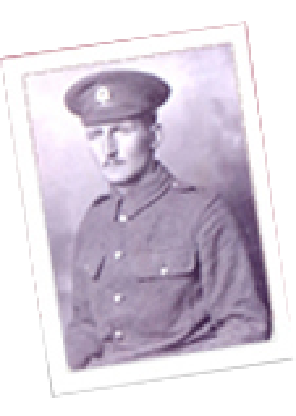
- First Name(s):WalterJohn
- Surname:JACKSON
- Service Number:103764
- Rank:
Private
- Conflict:WW1
- Service:Army
- Army Sector:Infantry
- Corps:Machine Gun Corps
- Regiment:Machine Gun Corps (Infantry)
- Former Units:Formerly 1911, Worcestershire Regiment.
- Date of Death:3rd August 1918
- Age At Death:24
- Place of Death:Died at sea
- Place of Burial:Commemorated on Hollybrook Memorial, Southampton, Hampshire, England.
- Place of Birth:Born St George's, Worcester, enlisted Worcester
- Home Town:Unknown
- Casualty's Relatives:
Son of Walter J. and Mary E. Jackson, 2 Court Moors, Worcester

JACKSON Walter John Is Named On These Memorials
Further Information About JACKSON Walter John
The following information has been researched by Brian Hill:
Walter John Jackson lived at No 2 Court, The Moors, Worcester, the eldest son of Walter and Mary Jackson. In 1911 he was employed as a Grocer’s Porter, and had a younger brother, John, and sisters May, Louisa and Mary. The house where they lived is long gone, and the site is now occupied by a car park adjacent to Pitchcroft.
Walter was serving in the 46th Battalion Machine Gun Corps when he died, having previously served with the Royal Warwickshire Regiment and initially the Worcestershire Regiment. He was an early volunteer, entering France in March 1915. He was probably among the 7 soldiers from 46th Machine Gun Corps Battalion wounded or evacuated in the last week of July 1918 near Bethune. His last ‘social event’ may have been the Battalion Horse Show held on 21st July, not far behind the front line.
On 3rd August 1918 Walter was on the hospital ship Warilda when it was torpedoed by the German submarine UC-49 at 01.35am midway between Le Havre and Portsmouth. Taken in tow by the destroyer HMS P39, the Warilda finally sank at 04.10am. On board the ship were 801 people including around 600 wounded and women of Queen Mary’s Auxiliary Army Corps. The 123 lives lost on the Warilda included all the wounded in ‘I’ ward (the lowest ward with 101 walking patients), all the engine room staff and 19 from capsized lifeboats. Among those lost was Mrs Violet Long, Deputy Chief Controller of the Q.M.A.A.C.
The official report on the sinking praised the efficiency and rapidity of the British medical orderlies and crew in brining on deck, in a few minutes, 100 leg and splint cases and over 300 cot cases ready for evacuation to the lifeboats, which undoubtedly saved many lives.
U-boat UC-49 did not last long to enjoy its success of sinking the Warilda as it depth charged and sunk by the destroyer HMS Opossum just 5 days later on 8th August 1918.
If you have any information about JACKSON Walter John, please get in touch
Information AboutJACKSON Walter John