
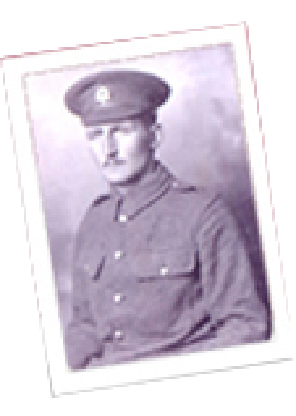
- First Name(s):JosephLaurence
- Surname:HULL
- Service Number:Unknown
- Rank:
Second Lieutenant
- Conflict:WW1
- Service:Army
- Army Sector:Infantry
- Regiment:Worcestershire Regiment
- Battalion:13th Battalion
- Former Units:None
- Date of Death:19th October 1916
- Age At Death:20
- Place of Death:Unknown
- Place of Burial:Dartmoor Cemetery, Becordel-Becourt, France, Grave II. D. 81.
- Place of Birth:Northfield, Worcestershire
- Home Town:Unknown
- Casualty's Relatives:
Son of Joseph and Lucy Ethel hull, of Gifford Cottage, Rangeworthy, Yate, Bristol

HULL Joseph Laurence Is Named On These Memorials
Notes About The Memorial(s) Listed Above
Additional information on the memorial: 2/Lieut. Worc. R.
Further Information About HULL Joseph Laurence
Art Student.
The following information has been researched by Jeff Taylor:
Battle of Le Transloy, 18th October 1916
At 3.40am on the 18th October 1916 the British Artillery opened a devastating fire. All along the line the British battalions, soaked to the skin but still eager, clambered out of their trenches and advanced through mud and rain against the enemy.
On the front of the 4th Worcestershire Regiment, the attack on the uncaptured portion of ‘Hilt Trench’ was made by X Company, three platoons attacking from the gun-pits and one platoon from the end of the portion already captured. That attack, though gallantly made, failed before unbroken wire. The companies were reorganised and eventually drove the enemy out of the remainder of ‘Hilt Trench’. Meanwhile, the other three companies of the 4th Worcestershire Regiment, with the 2nd Hampshire Regiment on their right, had pushed forward, following the creeping barrage from ‘Hilt Trench’ to ‘Grease Trench’. As the barrage lifted off the trench the attacking platoons charged in and made short work of the defenders. At the Western end of ‘Grease Trench’ a German strongpoint at the Five Cross Roads resisted successfully, but with that exception the whole of the trench had been captured by the Worcestershire and Hampshire Regiments.
The attack was over before it was really light. The Worcestershire platoons made such cover as was possible and held their gains throughout the day under a very heavy bombardment. Twice the enemy were seen forming up foe a counter-attack, but each time they were stopped dead by rapid fire. The rain beat down steadily, and the condition of the trenches grew hourly worse and worse. Men sank to their hips in mud and only with great difficulty could they be pulled out. Night fell and it became possible to reckon the loss, about 140 in all, including 13 officers. Three of the officers were killed and nine wounded, amongst the wounded officers was Second Lieutenant J.L. Hull.
If you have any information about HULL Joseph Laurence, please get in touch
Information AboutHULL Joseph Laurence