
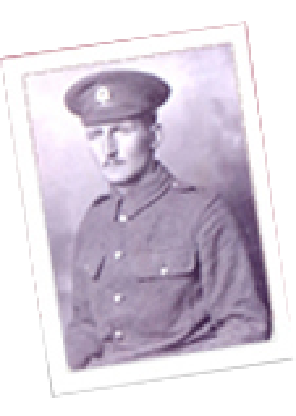
- First Name(s):EdmundSidney
- Surname:HOWELLS
- Service Number:Unknown
- Rank:
Lieutenant
- Conflict:WW1
- Service:Army
- Army Sector:Artillery
- Corps:Royal Field Artillery
- Former Units:None
- Date of Death:27th March 1918
- Age At Death:19
- Place of Death:Unknown
- Place of Burial:Milford Haven Cemetery, Pembrokeshire, Wales, Grave C. 197/200.
- Place of Birth:Unknown
- Home Town:Unknown
- Casualty's Relatives:
Son of Canon Edmund and Mrs. Emily Maud Blanche Howells, of The Vicarage, Milford Haven

HOWELLS Edmund Sidney Is Named On These Memorials
Further Information About HOWELLS Edmund Sidney
Flight Commander, R.F.C.
Born, September 20th, 1897. Killed when Flying, April 28th, 1918.
“Eddie” Howells was the eldest son of the Reverend E. J. Howells, B. D., Vicar of Milford Haven. He entered the School House in the Lower School in September, 1909, from the Milford Haven County School, and left in July, 1914, from the Sixth Form, with the School Certificate, hoping to proceed to Keble College, Oxford and eventually to take Holy Orders – a purpose which he pursued steadily throughout his most creditable School time, during which he made many friends. He rowed in the 2nd IV in 1914 and was an N.C.O. in the O.T.C. and a leader in the Signalling section. On the outbreak of War he at once applied for a commission and was accepted on his 17th birthday for the 10th Welsh Regiment. He trained at Seaford and owing to his knowledge of signalling was selected as Battalion Signalling Officer and Galloper to his Colonel. Early in 1915 he was transferred to the Army Cyclists Corps, with which he served for some time in Flanders, where he was wounded.
On recovering he returned to his Regiment and proceeded to Salonika, where he volunteered for the R. F. C. He served for some time in Egypt and was recalled in 1917 to act as an Instructor at home. He was attached to the 120th Squadron, where he was Acting Flight Commander and assistant Wing Examiner, when he was accidently killed. His commander wrote of him: “Your son was always my right hand man to teach and train young characters. He was loved and admired by all. He was a perfect pilot, absolutely fearless, most hardworking, and above all a perfect gentleman.” Another Officer writes: “He was a gallant gentleman and the best aviator we ever had at this station.” His body was laid to rest, with full Military honours, on Easter Monday, after a beautiful service in the crowded Church which he loved, where the coffin has rested in the Lady Chapel throughout the Easter Festival. A fitting close to a bright and beautiful life lived in dependence on the Unseen. – R.I.P.
W. H. C.
Source for additional information: The Vigornian, June 1918, No.92, Vol. IX.
If you have any information about HOWELLS Edmund Sidney, please get in touch
Information AboutHOWELLS Edmund Sidney