
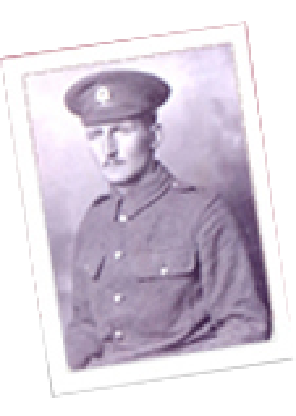
- First Name(s):RobertHenry
- Surname:GRAZEBROOK
- Service Number:Unknown
- Rank:
Engineer Commander
- Conflict:WW1
- Service:Navy
- Naval Service:Royal Navy
- Ship:HMS Cressy
- Former Units:None
- Date of Death:22nd September 1914
- Age At Death:
- Place of Death:Unknown
- Place of Burial:Commemorated on Chatham Naval Memorial, Kent, England, Panel 1.
- Place of Birth:Unknown
- Home Town:Unknown
- Casualty's Relatives:
Son of Charles and Alice Grazebrook, 148 Brompton Rd., South Kensington, London

GRAZEBROOK Robert Henry Is Named On These Memorials
Notes About The Memorial(s) Listed Above
Old Swinford St Mary’s Church with the additional information: Eng. Cmdr. R.N.
Further Information About GRAZEBROOK Robert Henry
Native of Stourbridge.
Robert Grazebrook was the second son of Charles Grazebrook of The Racecourse, Pedmore, and grandson of George Pearson of Thorn Hill, Oldswinford. He was educated at Stourbridge Grammar School from 1884 to 1891 and then at Devonport, where he embarked on a career in the Royal Navy. He had been very successful. For six years he had been an engineer officer in King Edward VII’s royal yacht ‘Victoria and Albert’. Then he had joined HMS Tartar and went on to HMS Sappho. Some months before the outbreak of war he became Engineer Commander of HMS Cressy, a pre-Dreadnought battle cruiser.
The sinking of the Cressy, together with her sister ships, Hogue and Aboukir, was a naval disaster. It came only six weeks after the outbreak of war and brought home to both the navy and the public just how serious a threat submarines could be. These three ships had been posted not far off the neutral Dutch coast to deter the German High Seas fleet from entering the Channel. Their vulnerability had been eventually realised, not least by Winston Churchill as First Sea Lord. However, orders requiring the ships to retire to British waters were delayed and then it was too late. A German submarine, U9, attacked the Aboukir at 7.30 a.m. on 22nd September and a single torpedo was responsible for its sinking. The Hogue stood by to rescue the crew and was sunk by another torpedo. In turn, the Cressy gallantly attempted to rescue the survivors, while firing at a periscope. Thirty minutes later three torpedoes had been launched by U9. The first had little effect, the second missed but the third hit the hull, causing the ship to heel over. Commander Nicholson, a survivor, reported that Robert Grazebrook was seen with others on the upturned keel of the vessel before it finally went down. Although he was an expert swimmer, he was not seen again. The losses were 1459 men dead while 837 were saved by Dutch vessels and British trawlers.
A fine memorial window to Robert Grazebrook was erected in the Lady Chapel at St. Mary’s church in 1916. At the top can be seen the year 1914 and the flags of Britain’s allies in that year, including Japan and Serbia. At the bottom is a view of the ship, together with his portrait. The main scene is a poignant depiction of Christ saving St. Peter from the waves. The window was designed and erected by William Morris and Co., well known for their strong colours and flowing design. The impact of the waters and the powerful imagery make this a dramatic and fitting memorial to Robert Grazebrook. He was 38 years of age.
Robert Grazebrook was 8 years of age when he entered King Edward VI Grammar School on 2nd May 1884. At the time of his admission to the school his parent is recorded as Alice Elizabeth Grazebrook, Gentlewoman, of Hanbury Hill, Stourbridge. Robert had previously been educated at Home. He left King Edward VI Grammar School on 25th July 1891.
From King Edward VI Grammar School war record booklet:
Engineer Commander, R.N.; lost in HMS “Cressy” 22nd September, 1914.
HMS Cressy was the Royal Navy’s first armoured cruiser. The ship was on patrol in the North Sea off the Dutch coast along with three other cruisers when they were spotted by the German submarine U9. At around 06.25 on the morning of 22nd September 1914, U9 attacked first HMS Aboukir and HMS Hogue, successfully sinking both ships. The Captain of HMS Cressy (Captain Johnson) stopped the ship in order to lower boats to rescue survivors from the two sinking ships but immediately got underway when a periscope was sighted. At around 07.20, U9 attacked HMS Cressy with two torpedoes, one of which missed the ship and the other hitting the ship on her starboard side. A third torpedo fired by U9 also hit the ship and she sank within 15 minutes.
Source: http://www.worldwar1.co.uk/cressy.htm
If you have any information about GRAZEBROOK Robert Henry, please get in touch
Information AboutGRAZEBROOK Robert Henry
Credits: Researched by The Black Country Society. School records courtesy of King Edward VI school archives, researched by Sandra Taylor. Additional HMS Cressy information and link to website researched by Sandra Taylor.