
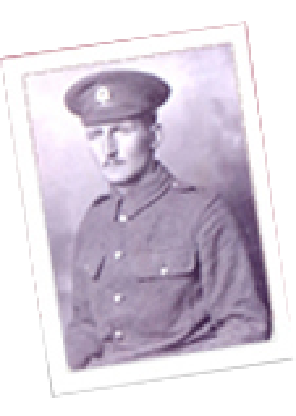
- First Name(s):ArchibaldEdward
- Surname:GIBBS
- Service Number:Unknown
- Rank:
Second Lieutenant
- Conflict:WW1
- Service:Army
- Army Sector:Infantry
- Regiment:Worcestershire Regiment
- Battalion:11th Battalion
- Former Units:None
- Date of Death:25th April 1917
- Age At Death:22
- Place of Death:Unknown
- Place of Burial:Commemorated on Doiran Memorial, Greece.
- Place of Birth:Unknown
- Home Town:Unknown
- Casualty's Relatives:
Son of Harry James and Fanny Gibbs, 26 Sunnyside Rd, Worcester

GIBBS Archibald Edward Is Named On These Memorials
Further Information About GIBBS Archibald Edward
Archibald Gibbs was born in Worcester in 1894, the son of Harry James and Fanny Gibbs (nee Stokes) who married in 1882. In 1891 the couple lived at Clevedon House, Lansdowne Road, Worcester with their two young sons, Frederick aged 6 and Harry aged 4. Fanny’s mother Anne was also resident in the house. By 1901 Frederick was living with an aunt in Aston Birmingham and working as an insurance clerk. His brothers Harry, Gilbert and Archibald resided with their parents and grandmother Anne Stokes at Clevedon House, Worcester. Archibald attended Worcester Royal Grammar School from 1904 to 1912, following in the footsteps of his older brother Gilbert.
Archibald enlisted as a Private in the 21st Battalion Royal Fusiliers in 1914 before gaining a commission as a Second Lieutenant with the Worcestershire Regiment on 1st January 1915. He landed in France on 21st September 1915 and from there was sent to Salonika where he arrived on 20th November 1915. Archibald was killed in action on 25th April 1917, his brother Gilbert was killed just 3 days later.
The following extract is taken from The Worcestershire Regiment in the Great War by Captain H. FitzM. Stacke of the Regiment, 1928:
On 21st September 1915, Archibald Gibbs left the Wiltshire training grounds, entrained at Warminster for Southampton and thence crossed to Boulogne with €˜D’ Company of the 11th Battalion of the Worcesters. The battalion continued training in Picardy and then sailed for Serbia in November 1915, remaining in Macedonia throughout 1916. In April 1917 they found themselves in Greece taking part in the Salonika campaign.
At 21.45 on the evening of 24th April 1917, the Battalion attacked across the Jumeaux Ravine in an attempt to capture trenches held by the Bulgarian Army. A barrage of shells from the enemy caught the Worcesters by surprise but despite heavy casualties, they took their objective and removed the Bulgarians. Four hours of intense fighting followed with the Worcesters beating off several counter attacks whilst coming under constant shell and mortar fire. Finally at 04.00 on 25th April, the order was given to retire, undoubtedly due to the superior strength of the enemy’s artillery. Casualties were high and included Second Lieutenant Archibald Gibbs, whose body was never identified. He is commemorated on the Doiran Memorial in Northern Greece, close to the Yugoslavian border.
Archibald’s death was reported in the Worcester Daily Times 3rd May 1917 and the Worcester Herald 19th May 1917:
Son of Harry James and Fanny Gibbs, 26 Sunnyside Road, Barbourne, Worcester. Deceased was aged 22 and educated at Worcester Royal Grammar School. When war broke out he was about to enter Birmingham University. He however joined the Public Schools’ Corps in September 1914. In the following January he obtained a commission in the Worcestershire Regiment and afterwards left with the battalion in September 1915 for Salonika, and has not been home since. His brother, 2nd/Lt. Gilbert F. Gibbs, also of the Worcestershire Regiment, was transferred to the Somerset Light Infantry in France, October last.
A photograph of Lieutenant A.E. Gibbs of Worcester can be found in Berrow’s Worcester Journal Supplement, Saturday 19th May 1917, available at Worcestershire Archives.
The following information has been researched by Geoff Hill:
1911 Census
145 Lansdown Road, Worcester
Archibald Edward Gibbs, aged 16, school boy.
At the same address: Harry James Gibbs (father), insurance broker, mother and 1 brother.
From October 1915 to the end of November 1918, the British Salonika Force suffered some 2,800 deaths in action, 1,400 from wounds and 4,200 from sickness. The campaign afforded few successes for the Allies, and none of any importance until the last two months. The action of the British force was hampered throughout by widespread and unavoidable sickness and by continual diplomatic and personal differences with neutrals or Allies. On one front there was a wide malarial river valley and on the other, difficult mountain ranges, and many of the roads and railways it required had to be specially constructed.
If you have any information about GIBBS Archibald Edward, please get in touch
Information AboutGIBBS Archibald Edward
Credits: Newspapers researched by Adrian Carter.