
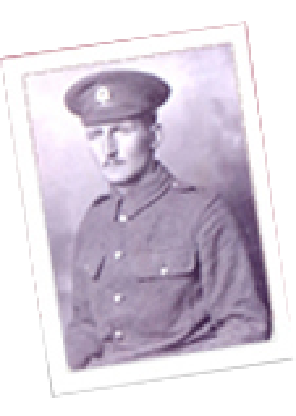
- First Name(s):JohnHenry
- Surname:EDWARDS
- Service Number:Unknown
- Rank:
Sergeant
- Conflict:WW2
- Service:Army
- Army Sector:Home Guard
- Regiment:Staffordshire Home Guard
- Battalion:39th Battalion
- Former Units:None
- Date of Death:13th October 1943
- Age At Death:
- Cause of Death:Accident
- Place of Death:Unknown
- Place of Burial:Commemorated on the left hand column of the Birmingham (Perry Bar) Crematorium, Warwickshire, England.
- Place of Birth:Unknown
- Home Town:Unknown
- Casualty's Relatives:Unknown

EDWARDS John Henry Is Named On These Memorials
Further Information About EDWARDS John Henry
John Edwards was born on 23rd November 1914. He entered Form M4 Kings School on 19th January 1929. At the time of his admission to the school his parent is recorded as H.E., Forest Cottage, Kinver, Staffordshire. John had previously been educated at St Michaels College, Tenbury. He left Kings School from Form L5 in April 1931. He was killed in 1943 whilst serving with the Home Guard.
The following information has been researched by Sandra Taylor:
The death of John H. Edwards age 28 is registered in the December Quarter 1943 under the Rowley Regis Registration District.
The following report appears in Berrow’s Worcester Journal, Saturday 16th October 1943:
Home Guard killed by Bomb
Son of a Hanbury Licensee
Mr John Henry Edwards, aged 28, of Tencoed, White Hill Road, Kinver, died at the Corbett Hospital, Stourbridge, from injuries received when he was struck by a bomb splinter while on Home Guard duty on Sunday.
The accident occurred when members of the Home Guard were being instructed in the use of the anti-tank bomb at Highgate Common, Enville. A demonstration was being given with a sticky bomb fastened to a mild steel plate, in order to show how the explosion goes down into the tank. The first demonstration passed off all right, but at the second the bomb chipped off splinters of the plate which flew among the members gathered for instruction and three men were struck. Capt. Phillips rushed the men to hospital and within half an hour Mr Edwards was having a blood transfusion and an operation followed.
Mr Edwards held the rank of sergeant and formerly, until pressure of business compelled him to relinquish the position, drum major of the band.
He was the only son of Mr and Mrs H. Edwards, of the Vernon Arms Hotel, Hanbury.
The late Mr Edwards, who was educated at St Michael’s College, Tenbury, and the King’s School, Worcester, was manager of the Brierley Hill branch of London Works (Barlows) Ltd, the well known steel manufacturers. He was keenly interested in music and sport, especially tennis. He was captain of Kinver Tennis Club for some years, and also conducted a dance band which was well known in the district. He was a member of Brierley Hill Rotary Club. Mr Edwards, who had been married for five years, leaves two small children – a boy and a girl.
The funeral service will take place at Kinver Church at 11 a.m. to-day (Saturday), and cremation will follow.
Berrow’s Worcester Journal, Saturday 23rd October 1943:
HOME GUARD’S DEATH
War Office Instructions Not Carried Out – says Coroner
A Home Guard officer who gave his evidence at the inquest on Friday on Sgt. John Henry Edwards, aged 28, of Tencoed, White Hill Road, Kinver, who died from injuries at a bombing practice on Sunday, agreed that the class was standing nearer to the target than the official instruction directed. The men, he added, ought to have been lying down. Witness had not read the clause referring to this instruction.
Sergt. Edwards was the only son of Mr and Mrs H. Edwards, of the Vernon Arms Hotel, Hanbury.
Capt. Cyril Cotton, of the 39th South Staffs Battalion Home Guard, said that he had to give a demonstration of bombing including the use of a certain type of bomb. For the purpose of demonstration he proceeded to burst a piece of steel plate, three inches thick, with one of the bombs. The bomb exploded and a piece of plate flew towards the men.
IN DANGER ZONE
Dr. Leopold Feldman sid a piece of metal was recovered from the abdomen behind the liver.
The Coroner, Mr A.E.V. Sherwood, recording a verdict of “Accidental death,” said he wanted it clearly understood that nothing he might say detracted from his admiration of the work of the Home Guard, but in that particular case it seemed to him that the instructions issued by the War Office to officers giving demonstrations were not carried out. It seemed quite clear to him that the class were in the danger zone. The instructions made it quite clear that after the target was attacked pieces might fly long distances.
The Coroner criticised the distance from the target at which the class were standing, and the fact that they were not lying down, remarking that it was “inviting trouble.” He thanked Capt. Cotton for the frank way in which he gave his evidence, but he thought there had been a misinterpretation of the directions.
If you have any information about EDWARDS John Henry, please get in touch
Information AboutEDWARDS John Henry
Credits: Researched by Roy Winton. School records courtesy of Kings School Archives.