
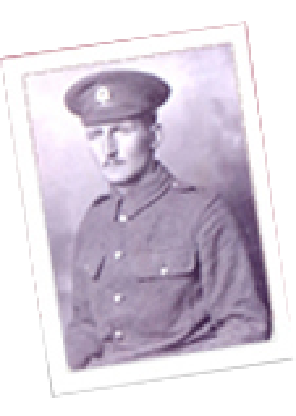
- First Name(s):FrederickGeorge
- Surname:DANCOX
- Service Number:21654
- Rank:
Private
- Conflict:WW1
- Service:Army
- Army Sector:Infantry
- Regiment:Worcestershire Regiment
- Battalion:4th Battalion
- Former Units:None
- Date of Death:30th November 1917
- Age At Death:38
- Cause of Death:Killed in action
- Place of Death:Near Masnieres, France
- Place of Burial:Commemorated on Cambrai Memorial, Louerval, France, Panel 6.
- Place of Birth:Born and enlisted Worcester
- Home Town:Unknown
- Casualty's Relatives:Unknown
An Image Of this Grave Is Available To Order
Order Grave's Image

DANCOX Frederick George Is Named On These Memorials
Notes About The Memorial(s) Listed Above
Worcester All Saints Church as Frank Dancox with the information: V.C. Worcester Guildhall as F.G. Dancox.
Further Information About DANCOX Frederick George
Awarded the Victoria Cross.
On 9th October 1917 at Boesinghe Sector, Belgium, after the first objective had been captured, work was considerably hampered by an enemy machine-gun firing from a concrete emplacement. Private Dancox who was one of a party of 10 detailed as moppers-up, managed to work his way through the barrage and entered the ‘pill box’ from the rear, threatening the garrison with a Mills bomb. Shortly afterwards he reappeared with a machine-gun under his arm and about 40 of the enemy. He brought the gun back to our position and kept it in action throughout the day.
Source for additional information: The Worcestershire Regiment in the Great War by Captain H. FitzM. Stacke of the Regiment, 1928. There is also a portrait of this event in the book.
No. 21654 Private Frederick George Dancox, Wore. E. (Worcester).
For most conspicuous bravery and devotion to duty in attack. After the first objective had been captured and consolidation had been started, work was considerably hampered, and numerous casualties were caused by an enemy machine gun firing from a concrete emplacement situated on the edge of our protective barrage. Private Dancox was one of a party of about ten men detailed as moppers-up. Owing to the position of the machine-gun emplacement, it was extremely difficult to work round a flank. However, this man with great gallantry worked his way round through the barrage and entered the “pill box ” from the rear, threatening the garrison with a Mills bomb. Shortly afterwards he reappeared with a machine gun under his arm, followed by about 40 enemy. The machine gun was brought back to our position by Private Dancox, and he kept it in action throughout the day. By his resolution, absolute disregard of danger and cheerful disposition, the morale of his comrades was maintained at a very high standard under extremely trying circumstances.
Source for additional information: 12330 Supplement To The London Gazette, 26 November, 1917.
Extract from The Story of Frederick Dancox from an Education pack by Kat Steenson and Beth Roper held at Worcestershire Archives:
Frederick Dancox (or Dancocks) is the only winner of the Victoria Cross to have been born and bred in Worcester. The confusion over the spelling of his surname arises from the mis-spelling of Dancox when he enlisted, and this is the spelling used here for him and his descendants.
He was the middle of three sons born to Louisa (nee Chance) and William Dancocks, a labourer, who had married in July 1875. His birth certificate reveals that his name was Frederick John Dancocks, and that he was born on 19th March 1878 at Crown Lane, Claines. By the 1881 census, and throughout his later life, he would use the middle name ‘George’.
He was baptised at St Stephen’s church on 23rd November 1878. It does not give the baby’s name, and only lists the parents’ surname as Dancox, living in Crown Lane, and the father as a labourer. This could be because it was private baptism at home and Frederick might not have been expected to live.
William Dancocks senior died aged 39 in May 1880, when Louisa was pregnant with their youngest son. She married labourer William Whittle three years later. The 1891 and 1901 censuses shows Frederick living with his mother, step-father, two brothers, two step-brothers (from Whittle’s previous marriage) and several younger half-siblings at 55 St George’s Lane and latterly at number 59 Hylton Road, both in Worcester city.
Frederick worked as a hay-trusser, until he volunteered for the Army in 1915. Perhaps prompted by his decision to go to war, Frederick married Ellen Pritchard on 8th March 1915 in Norton juxta Kempsey Parish Church. Ellen was living at 28 Dolday in Worcester, but Frederick was already a soldier based in Norton Barracks. Their eldest child Frederic[k] had been born in 1902, and was followed by Florence (born 1906), Harry (born 1909) and Nellie (Ellen, born 1913). The youngest child, George, was baptised in All Saints Church in July 1915 but tragically died the following summer aged just one year old. The family had lived in various streets in poorer parts of Worcester City including Hylton Road and Dolday.
Private Dancox had served in France for just under a year when he was awarded the Victoria Cross, having previously fought in Gallipoli. He was granted a fortnight’s leave at the end of November to collect the award from the King. Worcester prepared to celebrate the homecoming of the local hero in style: bunting was put up and alongside the Dancox family waited civic dignitaries, reporters, and hundreds of local people. He did not arrive.
Rumours of his death began to emerge in early December. They were confirmed in the local newspaper on 22nd December, when Berrow’s Journal printed both a letter dated the 14th informing Mrs Dancox of her husband’s death, and an account by a Quartermaster Sergeant who had been present at the battle that took place near Masnieres in France. On the 30th November, the battalion had been mobilised against the German’s counter-attack. Private Dancox, the eyewitness said, was killed by a shrapnel wound to the head.
Worcester Council recorded the names and addresses of children who had lost fathers during the war. The Dancox family is listed as living at 5 Bull Entry in the city centre. The eldest son, Frederick, was not included on the list, perhaps because he was no longer a dependent.
Frederick was the second of the Dancocks brothers to die with no known grave: his older brother William Dancocks, son of Mrs Louisa Whittle, of 6 Court, Carden St., Worcester, had been killed in action in 1914. So, too, were the two step-brothers, William and Thomas Whittle, neither of whom has a known grave.
After the war Ellen Dancox collected the VC on her husband’s behalf. A fund was set up for the Dancox family for members for the public to contribute to, with an initial donation from the City Council of 50 pounds. The Mayor and Town Clerk were among the trustees. In February 1918 the General Purposes Committee minuted that ‘subscriptions were not coming in very satisfactorily’, but eventually a total of 451 pounds was subscribed (which, in 2007, would have had the purchasing power of 15,750 pounds). The City Council bought the medal from the family a few years later. In 1923 it was framed and displayed in the Guildhall for a brief period before being loaned to the Regimental Museum. During the visit of the Prince of Wales (later King Edward VIII) to Worcester in October 1932, Ellen Dancox was chosen to present the Prince with the poppy wreath that he laid at the Cathedral War Memorial.
The same photograph of Private F.G. Dancox of Worcester, VC, can be found in Berrow’s Worcester Journal Supplement, Saturday 1st December 1917 and Saturday 22nd September 1917, available at Worcestershire Archives.
Frederick Dancox has no known grave, the photograph available shows his name on Cambrai Memorial.
If you have any information about DANCOX Frederick George, please get in touch
Information AboutDANCOX Frederick George
Credits: Casualty details, The Worcestershire Regiment in the Great War, The London Gazette and Berrow's Worcester Journal Supplement researched by Sandra Taylor. Education Pack researched by Paul Hudson.