
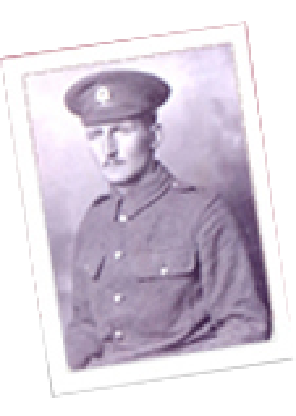
- First Name(s):GeorgeWilliamReginald Victor
- Surname:COVENTRY
- Service Number:7903
- Rank:
Lieutenant
- Conflict:WW2
- Service:Army
- Army Sector:Infantry
- Regiment:Worcestershire Regiment
- Battalion:7th Battalion
- Former Units:None
- Date of Death:27th May 1940
- Age At Death:39
- Place of Death:Unknown
- Place of Burial:Givenchy-Les-La-Bassee Communal Cemetery, France, Row A. Grave 2.
- Place of Birth:Born 10th September 1900 in Worcestershire, resident Worcestershire
- Home Town:Unknown
- Casualty's Relatives:
Son of George William Coventry, Viscount Deerhurst, and the Viscountess Deerhurst; husband of Nesta Donne, Countess of Coventry, of Llanstephan Carmarthenshire.
An Image Of this Grave Is Available To Order
Order Grave's Image

COVENTRY George William Reginald Victor Is Named On These Memorials
Further Information About COVENTRY George William Reginald Victor
10th Earl of Coventry.
The inscription on the memorial reads:
IN LOVING MEMORY
OF
GEORGE WILLIAM REGINALD VICTOR
10TH EARL OF COVENTRY
BORN 10TH SEPTEMBER 1900
KILLED IN ACTION IN FRANCE 27TH MAY 1940
Appears on the Army casualties list for Worcestershire.
The following report appears in Berrow’s Worcester Journal, Saturday 15th June 1940:
Earl of Coventry Reported Missing
The Earl of Coventry, who went to France early this year with the Worcestershire Regiment, in which he held the rank of lieutenant, has been officially reported missing.
Lord Coventry, the tenth Earl, 39 years of age, came into the title in 1930 on the death of his grandfather. His father, Lord Deerhurst, died in 1927. Lord Coventry, then the Hon. G.W. Coventry, married in 1921, Miss Nesta Donne Philipps, the daughter of Sir Owen Philipps, afterwards Lord Kylsant. Their marriage, which united two distinguished families, was the occasion of much rejoicing in Worcestershire and in Carmarthenshire, where the bride was highly esteemed both in county circles and among the farming community. She and her bridegroom shared a love of hunting, and when Lord Coventry came into the title he showed that he proposed, as far as he could, to maintain the notable hunting tradition of his grandfather.
He had followed Lord Kylsant as Master of the Carmarthenshire Hunt, and when he left to come to Worcestershire members of the Hunt marked their appreciation of his sportsmanship and service by presenting him with a portrait of himself and Lady Coventry.
With experience in control of a hunt and the history of the Croome behind him, it was natural that soon after he came to Worcestershire he should have some part in the direction of Croome, and he at first became associated with Col. Wiggin as Joint Master, then took over the entire control, and later was joined with Mr. Stapleton Martin, and later still became master on his own.
His chief interests were in hunting and country pursuits, but soon after his marriage he contested the Carmarthen Division in the Conservative cause, and he became President of the Bewdley Conservative Association when he came to live at Croome, but he did not pretend to be a diligent student of politics.
He was appointed a Deputy Lieutenant of the County, a J.P. for Pembrokeshire, and served as a lieutenant in the Worcestershire Yeomanry, but in September 1939, it was stated that he had taken a commission in the Worcestershire Regiment, and was on duty before war broke out.
Lord Coventry has three daughters and one son – the heir, aged five.
The report includes a photograph of Lord Coventry.
The following report appears in Berrow’s Worcester Journal, Saturday 27th July 1940:
Late Earl of Coventry
Memorial service at Croome
A memorial service to the late Earl of Coventry, who was killed in action at Givenchy on May 27 while serving as a Lieutenant in the Worcestershire Regiment, was held at Croome Church on Sunday afternoon.
Representatives of County Families and tenants on the estate filled the church, and many others were unable to gain admission.
The service was conducted by the Rev. H. F. Bennett, Rector of Croome and Pirton, assisted by the Rev. Dr. O. J. Hogarth, Rector of Severn Stoke. Psalm 90, “Lord Thou hast been our Refuge,” was chanted, and the hymns were “Love Divine, all loves excelling,” and “Fight the good fight.”
After the service Drummer R. Jones, of the Worcestershire Regiment, sounded the Last Post and reveille.
As the congregation left the church Mr A. Langfield, the organist, played “O Rest in the Lord.”
The report continues with an extensive list of family mourners, others present, tenants, local residents and staff.
In May 1940 the calm was suddenly shattered by the news of the German onslaught on the Low Countries. Not long afterwards the first casualties affecting the parish became known. Both territorial battalions of the Worcestershire Regiment, the 7th and 8th, were involved in the fighting. As a result of the subsequent German break through to the Channel coast and encirclement of the retreating British Expeditionary Force the allies were fighting on two fronts. In the west hastily improvised formations held a line along the canal from St Omer to La Bassee, against which the enemy threw four armoured and two SS divisions. The battle reached its climax on May 26th with an onslaught on 5 Infantry Brigade of the 2nd Division, which included the 7th Worcesters in which the Earl of Coventry was a platoon commander. The battalion war diary records what happened:- “The enemy in strong force with tanks succeeded in crossing the canal in the centre, left of Givenchy. D Company which was on the right were flanked by the enemy but made Givenchy a strong point, holding the village with about 70 men until 1530 hrs that day. Considerable casualties were inflicted on the enemy but not without severe casualties to the company. Lord Coventry was among the killed.”
George William Reginald Victor, 10th Earl of Coventry (and Lord of the Manor of Severn Stoke) had succeeded to the earldom on the death of his grandfather in 1930. Thirty nine at the time of his death, he was well above the average age of an infantry subaltern. He had been in the Worcestershire Yeomanry in his younger days and at the outbreak of war, as a member of the Territorial Army Reserve of Officers, had been posted to the 7th Worcesters. In the regimental journal ‘Firm’ one of his NCOs wrote of him, ‘He was a very good officer, but more of a gentleman. He put his heart and soul into his work and I will always remember him.’
Source for additional information: Severn Stoke. The Parish in Wartime 1939 – 1945 by Bob Cross, 1999.
A letter from P. Cheesman, Pirton Rectory, dated 15th May 1950 can be found within war records held at Worcestershire Archives requesting that Lieutenant George William Reginald Victor Coventry, 10th Earl of Coventry, Worcestershire Regiment be added to the county roll of honour.
George Coventry is also commemorated on a war memorial at Wye College, Kent.
If you have any information about COVENTRY George William Reginald Victor, please get in touch
Information AboutCOVENTRY George William Reginald Victor
Credits: Researched by Sandra Taylor and Brian Hill. Casualty and Berrow's Worcester Journal researched and transcribed by Sandra Taylor.