
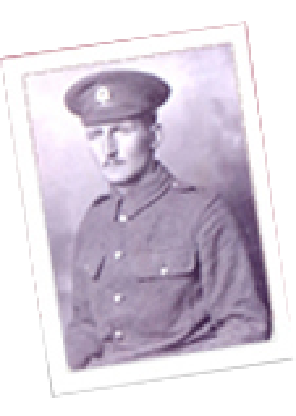
- First Name(s):DouglasJamesVincent
- Surname:BENNETT
- Service Number:4921814
- Rank:
Sergeant
- Conflict:WW2
- Service:Army
- Army Sector:Air
- Corps:Army Air Corps
- Regiment:1st Glider Pilot Regiment
- Former Units:None
- Date of Death:9th July 1943
- Age At Death:22
- Place of Death:Unknown
- Place of Burial:Commemorated on Cassino Memorial, Italy, Panel 12.
- Place of Birth:Unknown
- Home Town:Unknown
- Casualty's Relatives:Unknown
An Image Of this Grave Is Available To Order
Order Grave's Image

BENNETT Douglas James Vincent Is Named On These Memorials
Notes About The Memorial(s) Listed Above
Welland War Memorial with the information: Sgt. Pilot 1st Glider Regt.
Further Information About BENNETT Douglas James Vincent
Worked for the council as a clerk in the Education Department.
Appears on the Army casualties list for Worcestershire as Royal Berkshire Regiment. Also appears on the Royal Air Force casualties list for Worcestershire.
A letter from Douglas Bennett’s mother, Mrs E. Bennett, 10 Marlbank Road, Welland, dated 24th February 1950 can be found within war records held at Worcestershire Archives requesting that his name be added to the county roll of honour.
A letter from Stanley H. Childs, St James Church, The Vicarage, Castlemorton, Malvern, dated 9th May 1950, can be found within war records held at Worcestershire Archives requesting that Sergeant Pilot D.J.V. Bennett, 1st Glider Regiment, be added to the county roll of honour.
The following information has been researched and transcribed by Mick Wilks:
Son of Mr and Mrs Bennett of Marlbank Road, Welland.
Gordon Bennett, another Old Hancastrian and Jim Bennett’s brother has provided me with much information about his brother’s life and death as follows.
Jim Bennett was born in 1921, in Kings Norton, Birmingham, just before his parents moved to Welland. Here he was educated at the local primary school and later at Hanley Castle Grammar School. He excelled at all sports, including boxing and passed his School Certificate, aged fifteen, a year earlier than usual.
Jim’s first employment was with the County Council’s Education Department and during this period he studied at Malvern Night School, gaining certificates in Shorthand, Typing and Book Keeping presumably to further his career in local government. His passion was aircraft and flying, however, and before the war had joined the Royal Air Force Volunteer Reserve, receiving his flying training at Prestwick. Unfortunately, he failed his flying course as a result of a misjudged landing, in snowy conditions. He then left the service and returned to the Education Department, a very disappointed man.
At the outbreak of war, with all his friends joining the services, he signed on in Worcester with the South Staffordshire Regiment. In January 1941 he was posted to Number 23 Infantry Training Centre at Norton Barracks and from there posted to the 7th Battalion, The Worcestershire Regiment. At one of the battalion parades, volunteers to become glider pilots were asked for. Jim was one of those who stepped forward in order to take the opportunity to fly again. He was transferred to Army Air Corps on 6th March, with the rank of Corporal, and posted to Tillshead camp on Salisbury Plain. After five weeks of basic training here (again), Jim was transferred to No.2 Squadron for initial flying training, flying Miles Magisters at Burnaston, in Derbyshire. After, completing his course here, Jim was posted to No.2 Glider Training School, at Weston on the Green, to continue flying training on Hotspur gliders, towed by Hawker Audaxes or Miles Masters, and then to Brize Norton to train on Horsa gliders, finishing his training on an advanced course at Chilbolton. Of this initial course of glider pilots, only six were to survive the four allied glider operations of World War II: Sicily, D-Day, Arnhem and the Rhine Crossing.
Jim and the rest of the newly trained glider pilots were posted to North Africa in April 1943, to prepare for the forthcoming landings in Sicily. Part of the preparation included assembling, themselves, the American Waco-built Hadrian gliders which had arrived in packing cases. These were to be towed by Douglas DC3 Dakota aircraft flown by American civilian pilots. Dust was a particular problem on their airfield that had been rolled out from a cornfield! Take-offs were ‘blind’ for the glider pilots due to the dust storm thrown up by the towing aircraft. By the time of their first operation, the Sicily landings, there had been only limited time to practice night flying.
The task of the glider pilots was to land their aircraft, the equipment and the half platoon of infantry troops they were carrying, near the Ponte Grande Bridge, on the island of Sicily, as part of Operation Ladbrook. The flight to Sicily apparently went well, keeping a low altitude to avoid the enemy radar. Unfortunately the American towing pilots released Jim’s and several other gliders early in the face of enemy flak and the glider pilots were unable to reach the island. Altogether some 300 of the British glider-borne troops were lost through drowning as a result of the premature release of their gliders. Jim Bennett was one of those lost, presumed drowned. It is noteworthy that all the British towed gliders reached their destination and the Ponte Grande Bridge was successfully captured. After the debacle with the American towed gliders, the British survivors were de-briefed, confined to camp and ordered not to take up the matter of the premature release of the gliders with the American tug pilots or their cowardice in the face of enemy fire!
Source: the Army Roll of Honour 1939 – 45 and Gordon Bennett.
Douglas Bennett has no known grave, the photograph available shows his name on the Cassino Memorial.
If you have any information about BENNETT Douglas James Vincent, please get in touch
Information AboutBENNETT Douglas James Vincent