
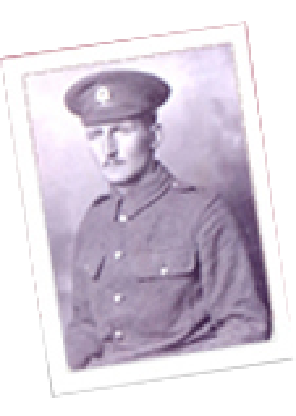
- First Name(s):IanMorehouse
- Surname:METCALFE
- Service Number:Unknown
- Rank:
Lieutenant
- Conflict:WW1
- Service:Army
- Army Sector:Infantry
- Regiment:Worcestershire Regiment
- Battalion:3rd Battalion
- Former Units:None
- Date of Death:1st November 1917
- Age At Death:20
- Place of Death:Unknown
- Place of Burial:Commemorated on Loos Memorial, France, Panel 64 and 65.
- Place of Birth:Unknown
- Home Town:Unknown
- Casualty's Relatives:
Son of Henry Longden Metcalfe and Catherine Anne Metcalfe, of Simla, Hatherley Rd., Kew Gardens, Surrey.
An Image Of this Grave Is Available To Order
Order Grave's Image
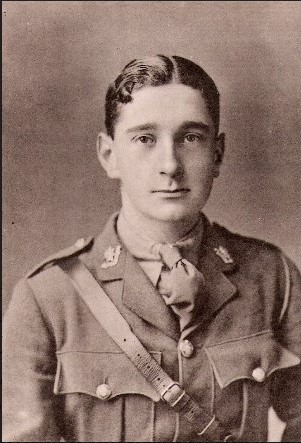
METCALFE Ian Morehouse Is Named On These Memorials
Further Information About METCALFE Ian Morehouse
Ian Metcalfe has no known grave, the photograph available shows his name on Loos Memorial.
The following information is courtesy of Amanda Bloomfield:
Ian Morehouse Metcalfe was born at Lee on the 3rd July 1897, the only son of Mr. and Mrs. H. L. Metcalfe of Kew.
He entered Crosby in 1910, leaving the school in 1914 and rated few mentions in the Laxtonian magazines of his day. He was confirmed by the Bishop of Peterborough and at 6 stone 12, he was the fairly small cox, who guided his boat to victory in the scratch fours competition of 1910.
Soon after the outbreak of hostilities, he enlisted in the Royal Fusiliers (2nd City of London Regiment) and was sent to Malta in December 1914. He then came back to Sandhurst and from there was gazetted to the 3rd Battalion Worcestershire Regiment in August 1915, proceeding to France a year later, when he was just 19. He served for 15 months at the Front, including the great attack on Messines Ridge, south of Ypres in June 1917, which was the prelude to Passchendaele at the end of July. The Battalion diary takes up the story:
“Throughout the whole of the attack the men had shown the greatest eagerness to press forward and there is little doubt that some of them ran straight into our own barrage. Direction was certainly lost at times, and the subsequent disorganisation lasted throughout the attack. The resistance of the enemy had been rendered very half-hearted by the heavy shelling of the preceding days, and for the most part when reached showed little inclination to fight. During the advance the enemy did not systematically barrage any particular line, but fired indiscriminately over the whole battle front. Machine gun fire was also encountered at several points, some of it certainly being indirect fire from guns in rear.”
On November 1st 1917, Ian Metcalfe’s luck ran out. He was killed leading a patrol and endeavouring to enter enemy trenches. Wounded behind enemy lines, he died as a prisoner of war at Givenchy and was buried by the Germans near Festubert. His burial place was transmitted to the British military via the German Red Cross. Aged 20 at the time of his death, having reached the rank of Lieutenant, his Company Commander praised him in the currency of the time: “I shall never be able to replace him: his men absolutely adored him; there was nowhere they would not go with him, so fearless was he.”
Though buried in France, his name was also put on his grandmother’s headstone in Teddington, Middlesex.

If you have any information about METCALFE Ian Morehouse, please get in touch
Information AboutMETCALFE Ian Morehouse
Credits: Photographs of Ian Metcalfe and the family grave are courtesy and copyright of Amanda Bloomfield.