
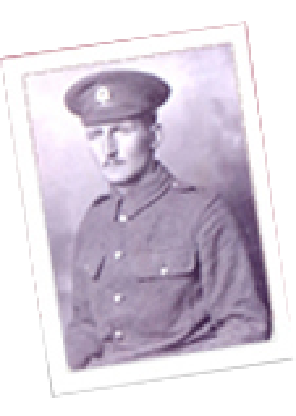
- First Name(s):GeorgeHerbert
- Surname:GITTINS
- Service Number:1210420
- Rank:
Flight Sergeant/Air Gunner
- Conflict:WW2
- Service:Air Force
- Air Force:Royal Air Force Volunteer Reserve
- Air Force Unit:101 Squadron
- Former Units:None
- Date of Death:18th November 1943
- Age At Death:21
- Place of Death:Unknown
- Place of Burial:Schoonebeek (Oud Schoonebeek) General Cemetery, Netherlands, Plot 3. Row 1. Grave 746.
- Place of Birth:Unknown
- Home Town:Unknown
- Casualty's Relatives:
Son of Henry and Annie Gittins, of Severn Stoke, Worcestershire

GITTINS George Herbert Is Named On These Memorials
Notes About The Memorial(s) Listed Above
Listed on Hanley Castle Grammar School now Hanley Castle High School WW2 Memorial as G.H. Gittens
Listed on Severn Stoke St Denys Church as George Herbert Gittins
Further Information About GITTINS George Herbert
Awarded Distinguished Flying Medal (DFM).
Before the year ended the parish once again had occasion for mourning, when it was learnt that the Lancaster bomber in which Flt/Sgt George Gittins was rear gunner had been shot down over Holland with the loss of all its crew.
The son of farmer Henry Gittins of Clifton Court Farm, George was one of the most popular young lads in the parish, renowned for his spirited and adventurous nature. He had been educated at Hanley Grammar School, to which he customarily rode each day on his pony. He had joined the RAF shortly after the war began, and trained at No 8 Air Gunnery School at Evanton in the north of Scotland. On passing out he was posted to No 22 Operational Training Unit at Wellesbourne, Warwickshire and subsequently undertook operational duties with No 150 Squadron at Snaith in Yorkshire. After another month’s course at the Central Gunnery School George returned to 150 Squadron, then based at Kilmington in Lincolnshire for a second tour of operations, followed by a spell as a gunnery instructor at No 50 Operational Training Unit at Hixton, Staffordshire. He was awarded the Distinguished Flying Medal after the completion of his second operational tour.
In December 1942 150 Squadron was posted to North Africa, but George Gittins did not go with it, instead being transferred to No 101 Squadron at Holme-in-Spalding Moor in Yorkshire. This squadron had just been converted from the twin-engined Wellington bomber to the much superior four-engined Lancaster. When the Squadron moved south to Ludford Magna, Lincolnshire in June 1943 it was also equipped with apparatus originally developed at the Telecommunications Flying Unit at Defford, devised so as to jam enemy radio frequencies, the so-called ‘Airborne Cigar.’™ An extra crew member was necessary to operate the three special transmitters used to render unintelligible instructions issued to enemy night fighter pilots. The system was so hush-hush that even the rest of the crew knew little about it.
On the evening of 18th November Lancaster No LM 370K2 took off from Ludford Magna at 5.21pm to join a force of 440 other Lancasters and 4 Mosquito pathfinders to attack Berlin and Ludwigshafen. The eight man crew was led by Flying Officer C.P. McManus; George, as usual, was the rear gunner. It was struck by anti-aircraft fire when crossing the Dutch-German border and crashed near the small Dutch town of Schoonebeek, some two kilometres from the German border. There were no survivors.
Source for additional information: Severn Stoke. The Parish in Wartime 1939 – 1945 by Bob Cross, 1999.
A letter from W.J.S. Davies Severn Stoke Rectory, dated 16th May 1950 can be found within war records held at Worcestershire Archives requesting that Flight Sergeant George Herbert Gittins, RAF, be added to the county roll of honour.
If you have any information about GITTINS George Herbert, please get in touch
Information AboutGITTINS George Herbert